
For many homeowners, a backyard privacy upgrade starts as a simple idea. The yard feels too exposed, the outdoor space is not being used as comfortably as it could be, and a stronger boundary seems like the obvious next step. But before planning a privacy upgrade, Denham Springs homeowners usually benefit from slowing down and thinking through how the property is actually used. Privacy is not only about installing a barrier. It is about improving how the yard functions for daily life. That means the best outcome often depends less on deciding that privacy matters and more on understanding what the yard needs in practical terms before any work begins. s
Why Privacy Upgrades Work Best When They Start With Real Yard Use
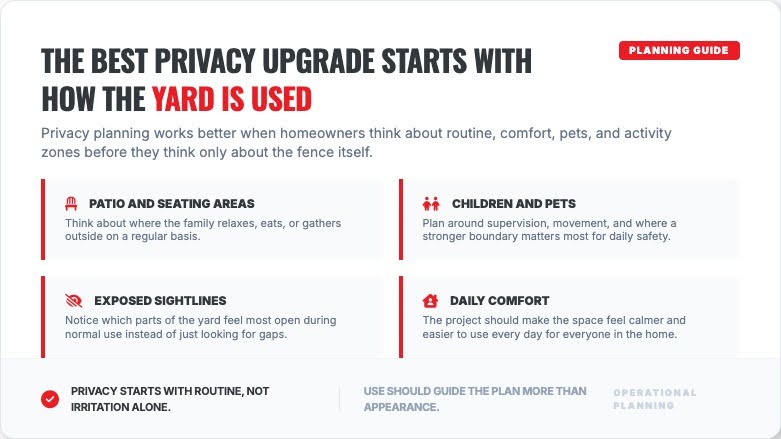
One of the most useful things a homeowner can do before planning a backyard privacy upgrade is to look honestly at how the space is used now. A family with children may need a yard that feels more enclosed and easier to supervise. A pet owner may want a stronger sense of separation and a clearer boundary. Another homeowner may care most about making a patio or seating area feel more comfortable and less exposed. These goals are related, but they are not the same. A privacy upgrade works best when it responds to the property’s actual routines rather than to a vague feeling that the yard simply needs something.
This is one reason privacy projects often turn out better when homeowners plan for use before focusing only on appearance. The most successful backyard upgrades usually improve the lived experience of the space. They make it easier to relax, gather, let pets roam more comfortably, or simply feel more settled in the yard. Once that becomes the focus, the project starts to look less like a generic fence decision and more like a home-function decision.
Local Homeowners Are Thinking More Seriously About Privacy
A recent Denham Springs-focused article, “Why Backyard Privacy Is Becoming a Bigger Homeowner Priority in Denham Springs,” framed this shift as a livability issue tied to comfort, outdoor use, and everyday routines. That local perspective matters because it reflects the way homeowners often arrive at the decision. The project is rarely only about blocking a view. It is about making the yard feel more usable, more private, and more aligned with how the household actually wants to spend time outdoors.
That growing seriousness around privacy also explains why homeowners should think carefully before they build. Once privacy is understood as part of how the yard works, planning becomes more important. The question is not simply whether a fence would help. The question is how the upgrade should be shaped to solve the right problem rather than just change the look of the perimeter.
Permit Awareness Should Come Early in the Process
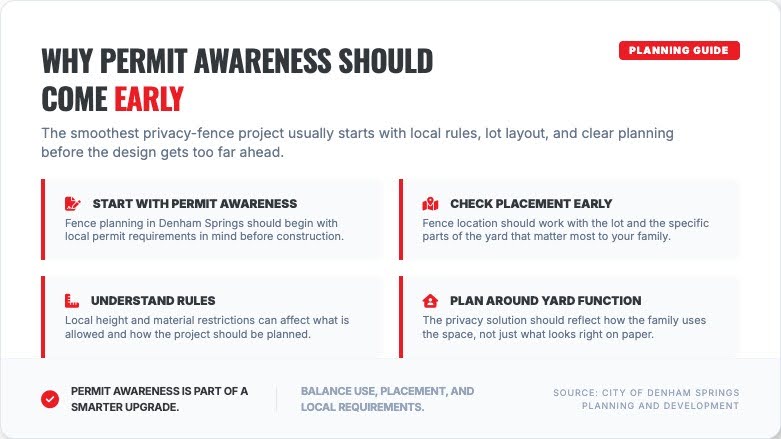
One of the first practical things Denham Springs homeowners should know is that fence projects are not only personal property decisions. They also involve local requirements. The City of Denham Springs fence regulations and permit form make clear that a permit is required before building a fence and that local fence restrictions apply. That matters because a homeowner who starts with permit awareness can avoid turning a simple backyard project into a more frustrating process later.
Permit requirements do not make the project less worthwhile. They simply mean the planning stage needs to be taken seriously. Homeowners who think early about local rules, placement, and the lot’s physical layout are usually in a better position than those who start with a design idea and only later discover that local requirements shape what can be done.
Placement Matters Just as Much as the Decision to Build
Another important part of planning is recognizing that placement often matters as much as the privacy fence itself. The right upgrade depends on where the yard feels most exposed, how the household moves through the space, and which areas are actually being used most often. A privacy boundary that looks fine on paper may not deliver the expected comfort if it does not align with how the backyard functions in daily life.
This is why homeowners benefit from asking more specific questions early. Where does the family usually sit outside? Which side of the yard feels most open? Where do pets tend to move? Which neighboring sightlines create the most discomfort? Once these answers become clear, planning usually becomes more practical and less abstract. The upgrade stops being a broad idea and starts becoming a targeted improvement.
Privacy Should Be Planned Around Routine, Not Just Frustration
Many homeowners begin this process because of frustration, but frustration alone is not always the best design guide. It may point to the issue, but the routine shows how the solution should work. A yard that feels too open during meals may need a different privacy emphasis than one where the main concern is children at play or pets needing a more defined outdoor area. The stronger the planning is tied to routine, the more likely the final result will feel right after the novelty of the project fades.
This also helps explain why some homeowners wait too long. They respond only once the irritation becomes impossible to ignore. By then, they may focus too narrowly on what has been bothering them, rather than stepping back to consider how the whole yard could function better. Planning earlier and more intentionally often leads to a better use of the investment.
Outdoor Living in Louisiana Makes the Backyard More Important
In Louisiana, outdoor areas often matter more than homeowners expect because they are used as active parts of the property for much of the year. The LSU AgCenter guidance on privacy fence and plant options reflects the idea that privacy is part of creating a better outdoor living space rather than simply enclosing a boundary. That perspective is useful because it places the privacy conversation inside a broader yard-planning mindset. The backyard is not just the area behind the house. It is part of how the home is lived in.
For Denham Springs homeowners, this makes privacy planning feel more practical and more worthwhile. If the yard matters for family comfort, pets, casual gatherings, or everyday relaxation, the upgrade should be planned as a functional improvement rather than just a perimeter change.
What Kip McDonald Says Homeowners Usually Need to Clarify First
Kip McDonald, owner of Prime Scape Fence, says many homeowners benefit from clarifying what they want their backyard to do better before they move into the project. In his experience, people often begin with a general desire for more privacy, but the most useful planning happens once they define how the yard is used and which aspects of that use feel limited. That is an important distinction because the better the homeowner understands the purpose of the upgrade, the easier it becomes to plan the right solution.
That perspective matches what many homeowners discover as they think more seriously about the project. The goal is not only to have a fence. The goal is to make the backyard feel more supportive of the life already happening there.
Local Service Becomes Relevant Once the Planning Questions Are Clear
Once homeowners understand their priorities more clearly, they usually begin looking for a local resource that can help translate those goals into a workable project. A local example appears in this Denham Springs fence service area page, which reflects the kind of locally focused support homeowners often seek after deciding that a privacy upgrade is no longer just an idea but a practical next step.
At that point, what matters most is that the project reflects the property, the household’s routine, and the local planning realities rather than being treated like a one-size-fits-all backyard fix.
Why a Privacy Upgrade Is Strongest When It Is Planned, Not Rushed
Privacy upgrades tend to work best when they result from clear planning rather than accumulated frustration. A rushed project may still solve part of the problem, but a better-planned one is more likely to improve how the yard feels and functions over the long term. That means taking time to consider permits, placement, routine, and how the backyard should best support the people who use it most.
Homeowners usually do not regret thinking too carefully about a project like this. More often than not, they wish they had clarified the goal earlier. The better the planning, the more likely the privacy upgrade will feel like a natural improvement to the property instead of a simple reaction to a long-standing annoyance.
Conclusion
Before planning a backyard privacy upgrade, Denham Springs homeowners should think about more than just blocking sightlines. They should consider permits, yard use, placement, family routine, pets, and how the outdoor space is intended to function. Privacy works best when it is planned around how the property is actually lived in. That is what turns the project from a basic boundary change into a meaningful improvement in everyday comfort.