
A 2025 Legal Blueprint for Severing Social, Digital, and Civil Links to Begin a New Life
VANCOUVER, British Columbia
In 2025, social disconnection is no longer just about leaving your hometown or deleting your Facebook account.
For those seeking a complete identity transformation—whether due to safety, reputation, privacy, or trauma—cutting ties with the past must happen at every level: legal, social, digital, and psychological.
Amicus International Consulting, a global leader in lawful identity resets, has seen a rising number of clients requesting total social disconnection strategies. From international relocation to name changes, from deregistering in public systems to disappearing from digital platforms, the modern path to starting fresh is both complex and deeply personal.
This press release examines the legal, emotional, and logistical aspects of disengaging from society and provides guidance on how to do so without violating the law.
Why People Choose Total Disconnection
While the term “disappearing” may evoke images of fugitives or fiction, the reality is different. Today, the people choosing total disconnection are often professionals, survivors, and digital privacy advocates.
Amicus has assisted:
- A domestic violence survivor whose abuser tracked her via social media and financial apps
- A former public figure dealing with harassment, media scrutiny, and defamation
- A cybersecurity expert targeted by state-sponsored hackers
- A corporate whistleblower at risk of industry blocklisting
- A digital rights activist seeking anonymity after receiving threats
In each case, the goal was not to evade the law—but to reassert privacy, autonomy, and control through legal means.
The Legal Framework of Social Disconnection
True disconnection is not simply an emotional or symbolic act—it’s legal. Amicus structures the process into four stages:
- Legal Identity Reset
This involves changing one’s name, nationality, or legal documentation. Depending on the client’s country of origin, this can be achieved through court name changes, citizenship-by-investment, or long-term residency with naturalization in privacy-respecting jurisdictions. - Deregistration from Former Civil Systems
In many countries, individuals continue to be “active” in government systems even after relocation. Amicus helps clients remove themselves from voter rolls, tax agencies, national IDs, and healthcare registries—lawfully. - Financial Re-identification
Amicus collaborates with international banks to ensure that accounts, tax records, and digital payment systems accurately reflect the new identity. This step is crucial to prevent triggers such as banking mismatches or compliance violations. - Digital and Social Media Disconnection
Social media accounts are deactivated or scrubbed, email providers are replaced with encrypted platforms, and device identifiers are changed to avoid cross-platform tracking.
Case Study 1: A Tech Influencer Erased Her Online Footprint
In 2023, a San Francisco-based cybersecurity influencer was targeted for exposing a government surveillance contract. Doxxed online, she faced harassment and threats.
With Amicus’ help, she legally changed her name in Canada, deregistered from California DMV and voter rolls, and relocated to Saint Lucia under a new passport. All her digital accounts were deleted or anonymized using secure protocols.
“I needed a reset. Now I own my life again,” she said.
Psychological Impact: The Emotional Challenge of Cutting Ties
Starting over doesn’t only require legal documents—it demands emotional resilience. Severing family, friends, and personal history can be painful, even when necessary.
Amicus offers access to psychologists who are familiar with identity transformation, helping clients process their loss and reframe their identity. Topics addressed include:
- Coping with grief after Social Exit
- Navigating guilt from leaving behind dependents or parents
- Reconstructing self-image after abandoning career, status, or fame
- Establishing new relationships under a new identity
In many cases, social disconnection isn’t abandonment—it’s a form of survival.
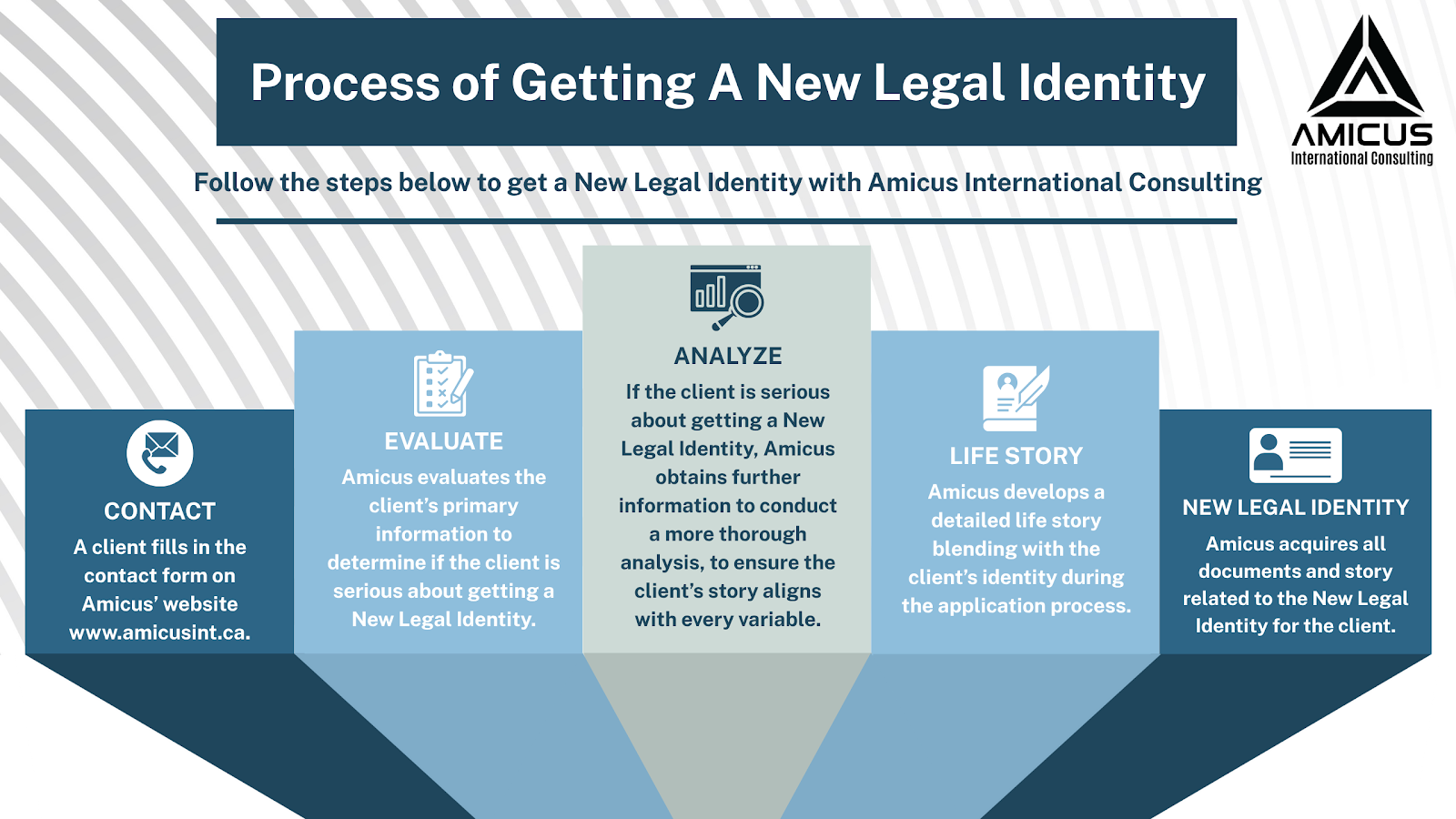
The Five-Step Strategy to Legal Disconnection
Amicus follows a proven process to help clients disconnect fully while staying within legal boundaries:
Step 1: Legal Name and Identity Change
Clients begin by petitioning courts for a legal name change or applying for a second citizenship through investment or naturalization. This becomes the legal anchor for the new life.
Step 2: Civil Deregistration and Record Severance
Clients are withdrawn from public databases, including:
- Taxpayer registries (IRS, CRA, HMRC, etc.)
- Voter rolls and political donation records
- State and municipal health systems
- Educational transcripts and licensing databases
- Local court and real estate registries (if applicable)
Step 3: Financial Migration
All financial accounts are closed, moved offshore, or converted to new accounts under the lawful identity. This includes:
- Bank accounts
- Investment portfolios
- PayPal, Stripe, and financial tech services
- Business ownership records and beneficiary documents
Step 4: Social and Digital Exit
Clients shut down or erase:
- Social media platforms
- Email tied to the old name
- Public-facing websites and blogs
- App Store and Cloud backups
- Biometric logins and linked devices
Step 5: Relocation and Reestablishment Abroad
Most clients relocate to new countries where their new identity is registered with immigration, banking, and civil systems. This includes establishing housing, employment, or self-employment, as well as digital access, within the new life structure.
Expert Interview: Therapist Dr. Mia Colburn on Disconnection Psychology
Q: What drives people to disengage socially at this level?
Colburn: “They’re often escaping ongoing trauma or systemic exposure. The digital world is intrusive—social disconnection is often an act of psychological self-defence.”
Q: Is it possible to rebuild after total disconnection?
Colburn: “Absolutely. Many of my clients go on to build new families, careers, and friendships. But there’s a necessary mourning process—they’re grieving their past.”
Q: How should someone prepare mentally for this transition?
Colburn: “Therapy is vital. You’re not just changing your name—you’re severing history. That must be honoured, understood, and metabolized.”
Case Study 2: The Businesswoman Who Walked Away from Her Brand
A 55-year-old fashion entrepreneur from Los Angeles faced intense scrutiny after her brand was wrongly linked to unethical labour practices overseas. Her image became the focal point of protests, online smear campaigns, and boycotts.
Amicus helped her legally change her name in Uruguay, sell her company shares to a holding trust, and move her finances offshore. Her new identity was established through a citizenship-by-investment program.
“I was never charged. But I lost everything—until I got a second chance,” she said.
Avoiding Illegal Methods of Social Disconnection
While disconnection is legal when done right, many individuals fall into traps by attempting shortcuts. Amicus highlights red flags that can jeopardize the process:
- Using fraudulent identity documents
- Faking death certificates
- Claiming political asylum without a basis
- Failing to pay taxes before disappearing
- Illegally erasing data or violating privacy laws
“Every piece must be documented and defensible,” said an Amicus legal advisor. “We don’t make you invisible. We make you untouchable—legally.”
Where Legal Disconnection Is Most Viable in 2025
Amicus recommends the following jurisdictions for complete legal disconnection based on cooperation with identity change requests, minimal public record sharing, and strong privacy protections:
- Uruguay: Ideal for name changes and residency
- St. Kitts and Nevis: Fast second citizenship, anonymous real estate ownership
- Belize: Offers long-term residency and privacy-focused banking
- Panama: Legal trusts, banking secrecy, and flexible immigration
- Georgia: Friendly to digital nomads and identity reset professionals
- Paraguay: Residency within 90 days and minimal bureaucratic tracking
Each destination is vetted for legal stability, record suppression, and integration pathways.
Case Study 3: Escaping a Cult and Rebuilding in Paraguay
A 29-year-old woman fled a religious cult in rural Missouri. After testifying against the group, she feared retaliation and harassment. Amicus guided her through a name change, deregistration from Missouri voter rolls and federal tax systems, and relocation to Paraguay.
There, she registered as a self-employed English teacher and now works remotely.
“I disappeared with purpose,” she said. “I left behind the story that imprisoned me.”
Digital Hygiene: Final Steps to Disconnection
Once the legal and social ties are cut, the digital layer must be addressed. Amicus recommends:
- Scrubbing data from people search engines
- Deleting Apple, Google, and Microsoft cloud histories
- Using encrypted browsers and VPNs with jurisdictional obfuscation
- Replacing smart devices that collect location or biometric data
- Creating new digital identities that align with the new legal one
Digital traces can undo even the most thorough disconnections. Amicus provides training in digital disappearance, surveillance evasion, and reputation shielding.
Checklist: How to Disconnect and Start Over Legally
- File for a court-approved name change or second citizenship
- Deregister from all government systems tied to your old name
- Close or reassign financial accounts under legal protocols
- Erase or deactivate digital profiles, devices, and histories
- Relocate to a jurisdiction that supports your new legal identity
- Seek emotional counselling for loss, identity reconstruction, and reintegration
- Avoid illegal methods such as document forgery or asylum abuse
- Rebuild slowly and intentionally under a new civil and digital structure
Conclusion: Social Disconnection Is Not Escape—It’s Reinvention
The modern world leaves little room for reinvention unless it’s meticulously planned. Social disconnection, when done legally and thoroughly, can offer survivors, dissidents, and wronged individuals a second life without risk.
Amicus International Consulting has helped hundreds start over—on paper, online, and emotionally. The key is not to vanish but to reappear somewhere else, better protected and legally redefined.
Contact Information
Phone: +1 (604) 200-5402
Email: info@amicusint.ca
Website: www.amicusint.ca
Follow Us:
LinkedIn
Twitter/X
Facebook
Instagram
About Amicus International Consulting
Amicus International Consulting is the leading global provider of legal identity transformation, civil deregistration, second citizenship procurement, and digital disappearance services. With operations across five continents, Amicus provides lawful, confidential pathways for those who need to start over safely, effectively, and permanently.