
Amicus International Consulting Provides a Legal Roadmap for Survival in Countries That Refuse to Extradite to the United States
VANCOUVER, British Columbia
In an era of growing international surveillance and cooperation between law enforcement agencies, the idea of living freely outside the reach of extradition has become more than a fantasy—it’s now a carefully structured legal strategy.
For journalists, whistleblowers, political dissidents, and those targeted by unjust legal actions in the United States, relocating to a non-extradition nation is increasingly a matter of survival, not choice.
Amicus International Consulting, a leader in legal identity solutions and international relocation strategy, has expanded its 2025 guidance on how to legally, securely, and sustainably live in jurisdictions that reject or ignore U.S. extradition requests.
Through lawful identity change, secure documentation, financial planning, and digital safety protocols, Amicus empowers clients not only to escape persecution but also to build entirely new lives in jurisdictions beyond Washington’s legal reach.
What Is a Non-Extradition Nation in 2025?
A non-extradition nation is a sovereign state that either lacks a formal extradition treaty with the United States or routinely refuses to enforce such treaties. Many of these countries, due to strained diplomatic relations, neutrality in international conflicts, or constitutional protection, opt not to cooperate with U.S. extradition demands.
However, the absence of extradition does not imply lawlessness. These countries still require legal residency, compliance with local regulations, and integration into their civil systems. What they offer is a crucial reprieve for individuals who fear politically motivated, unfair, or retaliatory legal action in the United States.
Why People Choose to Live Outside U.S. Legal Reach
Over the past five years, Amicus has observed a significant increase in the number of Americans and dual nationals seeking to resettle in non-extradition countries. These are not criminals in the traditional sense, but individuals ensnared in complex political or legal situations, including:
- Journalists facing espionage or leaking charges for exposing corruption
- Whistleblowers threatened by national security laws or retaliatory prosecution
- Activists targeted by lawfare and surveillance due to their beliefs
- Entrepreneurs ensnared in unjust civil suits or SEC investigations
- Individuals fleeing abusive legal guardianships or family law systems
- Crypto pioneers or digital privacy advocates are wrongly accused of fraud or conspiracy
“Living abroad isn’t always about escaping justice,” said a legal consultant at Amicus. “Often, it’s about escaping injustice—and rebuilding life in a jurisdiction that values individual sovereignty.”
Where People Go: 2025’s Most Viable Non-Extradition Destinations
Amicus continually evaluates countries based on several criteria, including legal cooperation with the United States, political independence, technological surveillance capabilities, and a history of rejecting extradition requests. The top jurisdictions for strategic resettlement in 2025 include:
- Serbia
Serbia has repeatedly demonstrated that it will not automatically honour U.S. extradition requests, particularly in politically charged cases. It is not part of the EU or Schengen Zone, giving it autonomy from centralized European arrest frameworks.
- Montenegro
While Montenegro has a treaty with the U.S., its courts have delayed or rejected high-profile extraditions. Its Citizenship by Investment program offers a path to legal residency and protection.
- Russia
With no extradition treaty in place with the U.S. and a political stance often hostile to American interests, Russia remains a controversial yet effective haven. However, it presents significant limitations in terms of freedom of speech and economic mobility.
- China
China, while tightly controlled and politically complex, also lacks an active extradition framework with the U.S. It has, however, protected individuals wanted for corporate, cyber, or political offences.
- Iran and North Korea
Though rarely recommended, both countries have zero cooperation with U.S. law enforcement. For ideological defectors or state-level refugees, there may be options under extreme circumstances.
- Venezuela and Cuba
Long-time non-cooperators with U.S. extradition, these countries have provided refuge to high-profile fugitives and remain committed to resisting international legal demands.
- Nepal and Madagascar
These countries offer low surveillance environments, no extradition treaties with the U.S., and limited digital identity frameworks, making them ideal for low-profile relocations.
- The Maldives and Seychelles
Although known as tourist paradises, these islands often operate outside of high-level law enforcement integration and provide shelter for dual nationals with clean legal identities.
Case Study: The Tech Dissident in Montenegro
In 2023, a 39-year-old American technologist revealed surveillance backdoors in defence contractor code sold to foreign governments. Facing charges under the Espionage Act, he fled to Europe.
Amicus structured his legal identity change, enabled him to secure a passport via investment in Montenegro, and advised on digital anonymity. Despite a pending INTERPOL Red Notice, Montenegro denied extradition due to the political nature of the charges.
He now operates a privacy consultancy firm and holds permanent residency status.
Legal Foundations of Extradition-Free Living
Living in a non-extradition nation does not mean abandoning the law—it means using the law to protect oneself. Amicus helps clients lawfully restructure their identity and documentation to ensure consistency with the host country’s legal requirements. Services include:
- Legal name changes recognized by international authorities
- Second citizenship via investment or descent
- Residency permits and taxation compliance in host nations
- Secure relocation routes to avoid biometric and digital traps
- Local bank account setup with new documentation
- Asset shielding and offshore trusts are compliant with local regulations
Clients receive legal guidance through all processes, ensuring they do not violate international law or domestic statutes.
Challenges of Living Beyond U.S. Jurisdiction
Amicus warns that while living in a non-extradition country provides legal cover, it also presents challenges:
- No access to U.S. consular protection or legal aid
- Financial transaction limitations—especially for U.S. citizens under scrutiny
- Local corruption or unpredictable enforcement of laws
- Language barriers and cultural isolation
- Long-term visa and citizenship challenges
- Difficulty in maintaining family or professional ties in the U.S.
However, with careful planning and cultural integration training, many of these issues can be mitigated.
Managing Digital Identity: The Forgotten Battlefield
A passport change means nothing if a person’s digital identity remains exposed. Amicus offers full-spectrum digital dissociation services:
- Metadata cleansing from devices and documents
- Deletion or obfuscation of old social media profiles
- Creation of new online personas with separate professional identities
- Device compartmentalization and safe communication protocols
- Routine surveillance testing and alert systems for breach detection
As Amicus notes, “The surveillance state doesn’t care about your passport. It tracks your patterns, your behaviour, and your digital breath.”
Case Study: Whistleblower in South America
A former corporate accountant exposed a $200 million fraud involving a U.S.-based multinational firm. Facing RICO charges, she fled the U.S. and worked with Amicus to secure citizenship in a South American country with no extradition obligations. Amicus not only changed her identity but also helped her establish a remote financial auditing firm with new credentials and banking structures.
Today, she pays taxes legally, lives under government protection, and works with ethics organizations in Latin America.
Living a Normal Life—But Safely
Contrary to public opinion, those who live in non-extradition countries do not live in hiding. Many of them:
- Start businesses
- Buy homes
- Engage in philanthropy
- Marry and raise children
- Contribute to local economies
Amicus helps these clients reintegrate into society with new, clean, and lawful identities, ensuring their past does not unjustly dictate their future.
Who Should Consider This Path?
Amicus evaluates all clients to ensure they qualify for services. Ideal candidates include:
- Whistleblowers under real threat of retaliation
- Victims of government overreach or corruption
- Human rights advocates facing criminalization
- Individuals subject to politically motivated or unfair prosecution
- Survivors of financial surveillance or sanction abuse
Amicus does not support clients engaged in terrorism, violent crime, or transnational criminal networks.
How to Begin: A Confidential, Legal, and Strategic Approach
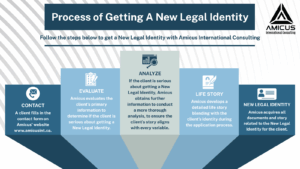
Amicus International Consulting begins with a complete privacy and legal vulnerability audit. This includes:
- Assessment of legal risk exposure
- Digital footprint evaluation
- Analysis of biometric and passport databases
- Second citizenship eligibility review
- Digital dissociation and identity restructuring plan
Once vetted, clients are onboarded into a structured relocation strategy that spans 6 to 18 months, with support throughout every step.
The Future of Extradition and Freedom
As extradition tools like facial recognition, predictive AI travel profiling, and multinational data sharing expand, Amicus predicts that the window for legal, anonymous relocation will narrow. That’s why timing, legal compliance, and strategy are critical.
“Staying free doesn’t mean hiding,” said an Amicus employee. “It means planning. It means living with dignity and protection. And above all, it means refusing to be hunted for telling the truth.”
About Amicus International Consulting
Amicus International Consulting is a global firm that provides legal identity restructuring, second citizenship services, international relocation, and privacy protection for individuals facing threats from surveillance, unjust prosecution, or political repression. With operations in over 30 jurisdictions, Amicus operates at the intersection of law, diplomacy, and human rights.
Contact Information
Phone: +1 (604) 200-5402
Email: info@amicusint.ca
Website: www.amicusint.ca