
Los Angeles, California — In a world of invasive digital surveillance, hyper-connected social networks, and expanding government recordkeeping, many people are asking: Is it legally possible to disappear? For those fleeing domestic violence, escaping predatory harassment, or simply seeking personal privacy, the concept of disappearing without committing a crime is no longer reserved for fiction.
Amicus International Consulting, a global leader in legal identity change services, explores the lawful pathways individuals use to legally erase or minimize their digital and government records without violating the law.
This comprehensive guide, supported by real case studies and expert legal analysis, examines how lawful identity transformation can protect privacy, safety, and dignity, without sacrificing access to healthcare, employment, and financial services.
The Myth of Total Erasure
Popular culture portrays identity erasure as an instant, all-consuming event—burning IDs, vanishing from databases, and walking away without a trace. Amicus International Consulting debunks this myth. “Complete erasure of government records is impossible and illegal in every jurisdiction,” explained an Amicus representative.
“But you can legally reduce digital exposure, change identifiers, and protect sensitive records within lawful systems.”
Case Study One: Escaping a Violent Stalker Through Legal Name Change
“Marissa,” a domestic violence survivor in Florida, worked with Amicus International Consulting to undergo a court-approved legal name change, enroll in the state’s Address Confidentiality Program, and update all public-facing records.
Her previous identity was kept private, minimizing her exposure to online harassment. “I didn’t disappear illegally,” she said. “I took legal steps to protect myself and regain peace.”
Government Records: What Can You Change?
Most countries provide lawful channels for individuals to alter government records under specific conditions. Common legal changes include:
- Name change via court petition
- Gender marker correction based on self-identification laws
- Updating birth certificates, driver’s licenses, and passports
- Address suppression programs for victims of violence
- Sealing of court records in certain qualifying situations
In jurisdictions such as California, New York, Canada, and much of the European Union, these changes are designed to protect vulnerable populations, promote autonomy, and provide lawful routes for privacy protection.
What Government Records Cannot Be Erased?
Legal experts at Amicus International Consulting clarify that while visible records can be updated, core legal identifiers—such as social security numbers, national insurance numbers, and biometric data—remain connected to an individual’s legal existence.
Criminal convictions, tax obligations, and financial debts also remain enforceable and accessible to government agencies and law enforcement.
“Identity change is a legal tool to gain privacy, not to escape responsibility,” Amicus stated.
Case Study Two: Professional Identity Reset in the United Kingdom
“Samuel,” a former corporate employee in London, legally changed his name after facing severe cyberbullying and career sabotage. With Amicus’s assistance, Samuel’s name and identity documents were updated across government agencies.
Additionally, obsolete online content was de-indexed under the UK’s “Right to be Forgotten” law. Samuel now operates a successful consultancy free from previous reputational damage.
Digital Erasure: Can You Disappear Online?
While digital erasure cannot match the comprehensive erasure depicted in fictional accounts, significant digital privacy gains can be achieved through legal means. Amicus International Consulting’s digital services include:
- Removal requests from data brokers under GDPR and CCPA laws
- Right-to-be-forgotten applications in the EU
- Search engine de-indexing for outdated information
- Permanent social media account deletion
- Reduction of personal references in background check databases
Case Study Three: Social Media Wipeout in Canada
“Eva,” a nurse practitioner in British Columbia, eliminated her online presence through lawful takedown requests. By combining a legal name change with online record suppression, Eva significantly reduced her exposure to patients and colleagues, thereby safeguarding her professional life.
Relocation and Citizenship Change as a Privacy Strategy
International relocation offers an additional layer of legal privacy. Dozens of countries provide second citizenship or residency programs through Investment, offering new national identities within established legal frameworks. Countries such as Paraguay, Dominica, and Saint Kitts and Nevis allow for the acquisition of legal citizenship, sometimes with the option to adopt a new legal name during naturalization.
Case Study Four: Business Owner’s Clean Slate via Citizenship by Investment
“Karim,” an entrepreneur from the Middle East, lawfully acquired citizenship in the Caribbean after social unrest threatened his family’s safety. Assisted by Amicus, he changed his legal name, secured a new passport, and opened private offshore business accounts, legally protecting his family from public and political targeting.
Amicus International Consulting’s Comprehensive Services
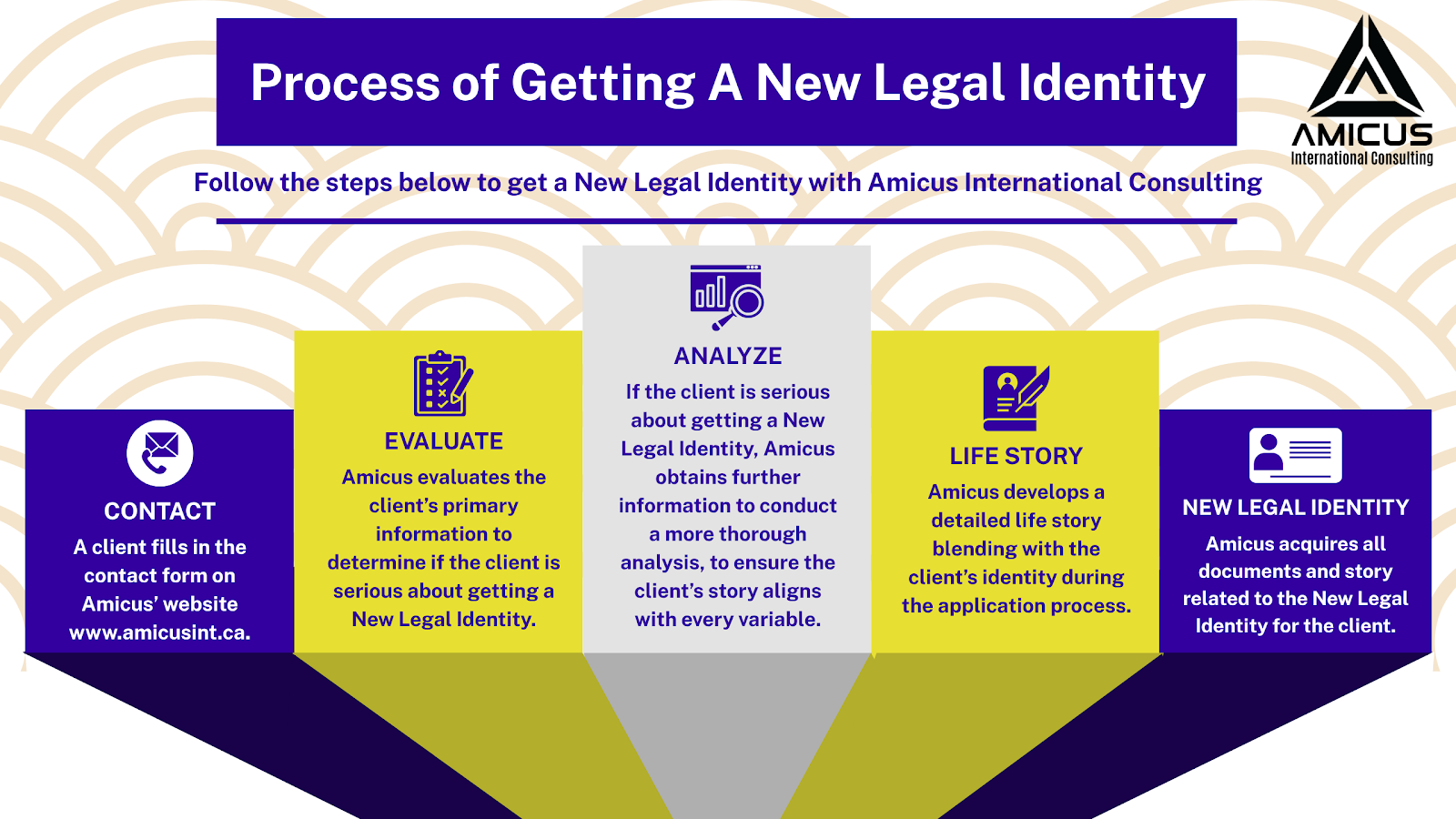
Amicus International Consulting offers a full spectrum of lawful identity transformation services, including:
-
- Court-approved name changes in multiple jurisdictions
- Gender marker amendments
- Legal document updates (passports, IDs, birth records)
- Address confidentiality program enrollment
- Second citizenship acquisition
- Digital footprint reduction and privacy consulting
- Psychological counselling for identity transition management
What Disappearing Legally Cannot Do
- Evade taxes, child support, or criminal charges
- Erase debts or contractual obligations
- Remove biometrics from government systems
- Fool international law enforcement or financial compliance systems
Expert Commentary: Identity Change is Legal, Fraud is Not
Professor Emily Spencer, legal scholar at the University of Toronto, told Amicus, “Modern identity laws protect personal dignity and safety. Lawful identity change supports personal security, but cross-border legal systems are interconnected. Identity transformation must not be confused with erasing responsibility, as financial and criminal accountability remain intact.”
Conclusion: Disappearing Legally Means Gaining Privacy, Not Escaping Accountability
In 2025, disappearing legally means minimizing exposure, controlling digital records, and securing personal dignity through lawful processes. It does not mean illegal evasion. With expert guidance, lawful pathways exist for name change, digital cleansing, and international relocation—all while respecting the law.
Amicus International Consulting remains the global leader in these services, offering professional, ethical, and confidential solutions to clients seeking legal privacy, protection, and peace of mind.
About Amicus International Consulting
Amicus International Consulting offers legal identity change services, second citizenship assistance, privacy consulting, and international relocation support to clients worldwide. With services spanning over 40 jurisdictions, Amicus remains committed to upholding privacy rights, facilitating lawful identity transformation, and ensuring personal security. Learn more at www.amicusint.ca
Contact Information
Phone: +1 (604) 200-5402
Email: info@amicusint.ca
Website: www.amicusint.ca
Follow Us
LinkedIn: https://www.linkedin.com/company/amicus-international-consulting
Twitter/X: https://twitter.com/amicusint
Facebook: https://www.facebook.com/amicusinternationalconsulting
Instagram: https://www.instagram.com/amicusinternationalconsulting