
A comprehensive guide to lawful personal reinvention in 2025
VANCOUVER, British Columbia — Across the United States, thousands of people each year reach a breaking point. For some, it’s escaping an abusive relationship. For others, it’s rebuilding after bankruptcy or fleeing relentless digital harassment.
Some simply want to disconnect from a toxic past and start again. While federal witness protection is limited to criminal informants, U.S. citizens have lawful pathways to begin anew through legal identity change, without breaking the law or disappearing into the shadows.
Amicus International Consulting, a firm specializing in legal identity reinvention, reports a surge in requests from Americans seeking legitimate ways to reset their lives in 2025. Their cases involve domestic violence survivors, financially ruined entrepreneurs, whistleblowers, and privacy-seekers. Many individuals have no criminal records but still carry the burden of stigma, danger, or reputational damage.
This press release provides a clear and practical roadmap for changing one’s legal identity in the United States. It explains how everyday Americans, without government protection or criminal involvement, can legally change their names, realign documents, and reclaim control over their futures.
Why Legal Identity Change Is Becoming Mainstream
In the age of digital surveillance, relentless data leaks, and the permanence of Google search results, Americans are realizing that simply moving to a new city is no longer enough. Public records, background checks, and facial recognition technology can link individuals to past mistakes, traumas, or legal disputes for the rest of their lives.
“More Americans understand that starting over isn’t about hiding—it’s about lawful, documented transformation,” said a senior legal identity strategist at Amicus. “With the right legal steps, a person can escape danger or reputational ruin without committing fraud.”
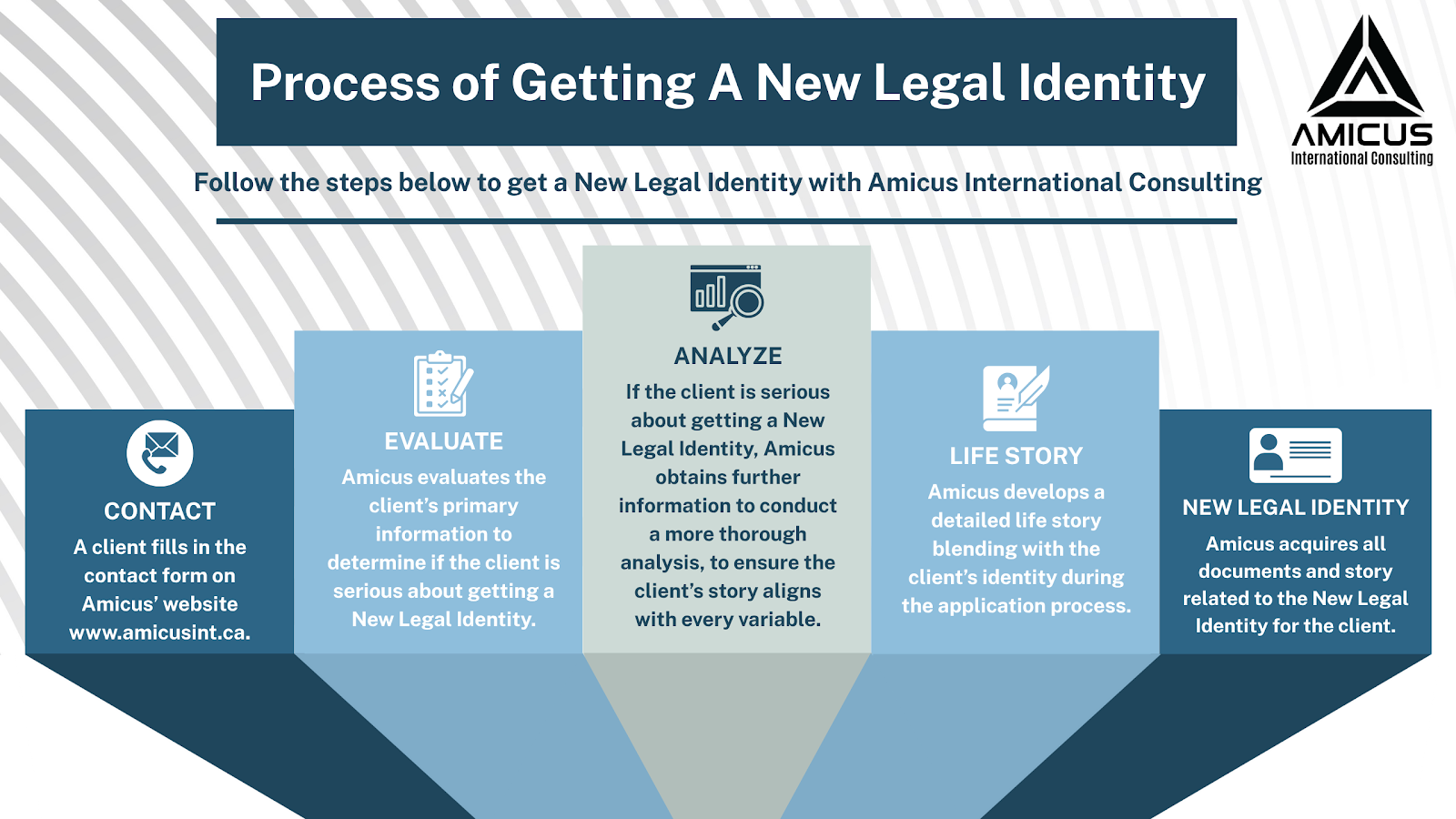
Legal identity change in the U.S. involves five key steps:
- Complete alignment of all government and personal documentation
- Optional domestic relocation with address confidentiality programs
- Digital privacy enforcement and footprint erasure
- Optional jurisdictional privacy via second residency or dual citizenship
Step 1: Name Change Through State Courts
Every U.S. state allows adults to change their name legally. Common lawful reasons include:
- Escape from domestic violence or stalking
- Gender affirmation or personal identity alignment
- Rebuilding after reputational damage or harassment
- Reclaiming privacy from online doxxing or identity theft
- Fresh start after financial or relationship collapse
The legal process includes:
- Filing a petition with a state court
- Passing a background check
- Notifying the public (may be waived for safety concerns)
- Attending a court hearing
- Receiving a court order approving the new name
Amicus helps clients choose states that offer sealed records, publication waivers, and efficient processing, including California, Nevada, and New York. The final court order becomes the legal foundation for all future identity documentation.
Step 2: Synchronizing Government and Personal Documents
After court approval, Amicus guides clients through updating every official record:
- Social Security Administration (Form SS-5 update)
- U.S. Passport (DS-11 application with court order)
- Driver’s license and Real ID update at the DMV
- IRS records and tax filings (Form 8822)
- Voter registration
- Bank accounts, insurance, and healthcare documents
- Employment records and professional licenses
- Academic diplomas and transcripts
“Synchronizing records is critical,” said an Amicus advisor. “A mismatch between your tax ID and driver’s license can trigger red flags in background checks.”
Step 3: Optional Relocation and Address Confidentiality
Some clients opt to relocate to a different state for greater privacy. Domestic relocation within the U.S. allows clients to rebuild under a new name in a new jurisdiction.
Amicus also assists qualifying individuals to enter state-level Address Confidentiality Programs (ACP), available in 40 states, including California, Texas, and Florida. ACP programs provide mail forwarding and shielded address listings for victims of abuse or stalking.
For greater privacy, clients may form a lawful anonymous LLC for property leasing or entrepreneurship, ensuring their names do not appear in public property databases or business filings.
Case Study #1: Abuse Survivor Rebuilds in Oregon
In 2021, a woman in Florida survived years of stalking by her former partner. Amicus guided her through a sealed name change in Nevada, enrollment in the Oregon ACP program, and updates to her DMV and tax ID. Today, she operates a private therapy practice in Portland under her new legal identity with no public connection to her former name.
Step 4: Digital Privacy and Data Erasure
Legal identity change is incomplete without digital cleanup. Amicus offers comprehensive digital identity services:
- Filing GDPR-like takedown requests under California’s CCPA
- Removing outdated court records from search engines
- Deleting or anonymizing old social media accounts
- Scrubbing business listings tied to former names
- Issuing data removal requests to data brokers and people-finder sites
Digital cleanup ensures:
- Employers or landlords don’t Google old reputational damage
- Stalkers cannot track personal locations or activities
- Online harassment cannot resurface under the new identity
“Starting fresh in 2025 means cleaning both your documents and your data,” said the Amicus advisor.
Case Study #2: Bankruptcy Recovery Through Legal Identity Change
After declaring bankruptcy in 2019, a former business owner in Chicago struggled to re-enter the professional world. Public records and Google results blocked employment opportunities. Amicus guided him through a name change in Illinois, coordinated IRS and banking updates, and deleted over 500 outdated references to his past business failures. Today, he operates a new marketing agency in Phoenix, boasting a clean credit profile and a lawful identity.
Step 5: Optional Second Residency or Citizenship
For some clients, particularly digital nomads, entrepreneurs, or those seeking financial privacy, Amicus supports applications for second residency or dual nationality in jurisdictions that prioritize privacy.
U.S. clients lawfully retain their U.S. citizenship while obtaining:
- Residency in Panama via the Friendly Nations Visa
- Permanent residency in Paraguay with low-cost deposit programs
- Second passports through ancestry (Ireland, Italy, Poland)
- Second citizenship by Investment (Dominica, St. Kitts & Nevis)
- Residency in Georgia or Uruguay with no global tax reporting
This strategy enables individuals to establish new banking, residency, and professional identities abroad in a lawful manner, while remaining compliant with IRS regulations through FATCA disclosures.
Expert Interview: Amicus Identity Consultant Explains the Process
We spoke with a senior Amicus consultant overseeing American cases.
Q: Who qualifies for a legal identity change in the U.S.?
A: “Almost anyone without a pending criminal case can apply for a legal name change. We mostly help abuse survivors, whistleblowers, reputationally damaged professionals, and privacy advocates.”
Q: Does this remove debt or legal obligations?
A: “No. Identity change is not debt evasion. Clients remain liable for legitimate debts. However, for many clients, this process ends harassment, enables new earning capacity, and removes social stigma.”
Q: How long does the whole process take?
A: “From court petition to full digital and documentation change, about 6–18 months.”
Case Study #3: Whistleblower Relocates After Legal Identity Change
In 2020, a corporate whistleblower from Texas faced harassment after exposing unethical practices within their company. Amicus coordinated her name change in New Mexico, IRS and passport updates, and digital suppression of over 800 online mentions. She obtained legal residency in Panama through Amicus’s relocation services and now operates a consulting firm focused on ethics compliance.
Timelines for Legal Identity Change in the U.S.
| Stage | Timeframe |
|---|---|
| Name change court petition | 1–3 months |
| Document synchronization | 2–4 months |
| Digital footprint cleanup | 3–6 months |
| Optional relocation or residency abroad | 3–12 months |
| Full transition completion | 6–18 months |
Estimated Costs
| Service | Estimated Cost (USD) |
|---|---|
| Name change court filings | $1,500–$3,000 |
| Document realignment services | $3,000–$7,000 |
| Digital privacy and data cleanup | $5,000–$10,000 |
| Domestic relocation and privacy structure | $7,000–$20,000 |
| International residency or second passport | $15,000–$100,000+ |
| Full legal identity package | $25,000–$150,000+ |
Who Amicus Helps
Amicus exclusively supports lawful individuals with no pending felony cases, including:
- Survivors of domestic violence and stalking
- Whistleblowers and corporate ethics reporters
- Reputationally damaged entrepreneurs and professionals
- LGBTQ+ individuals facing community harassment
- Financially distressed individuals rebuilding after bankruptcy
- Digital harassment and doxxing victims
Where Amicus Operates
- United States: All 50 states, including New York, California, Nevada, Florida, Texas
- Latin America: Panama, Paraguay, Uruguay
- Europe: Portugal, Ireland, Georgia
- Caribbean: Dominica, St. Kitts & Nevis
- Asia-Pacific: New Zealand (limited services)
Conclusion: Starting Over Legally in America Is Real—and Powerful
Legal identity change isn’t just for protected witnesses—it’s a lawful and empowering option for everyday Americans facing personal threats, social ruin, or reputational damage. With the proper legal process, professional support, and digital erasure strategy, U.S. citizens can reclaim their futures, protect their dignity, and start life anew—without hiding, lying, or breaking the law.
Amicus International Consulting remains the trusted leader in lawful identity reinvention, guiding Americans from paperwork to personal freedom.
Contact Information
Phone: +1 (604) 200-5402
Email: info@amicusint.ca
Website: www.amicusint.ca
Follow Us: LinkedIn | Twitter/X | Facebook | Instagram