
A global legal guide to recreating yourself—lawfully and fully
VANCOUVER, British Columbia — For people seeking a clean break from the past—whether due to trauma, danger, debt, or reinvention—the first step often begins not with a plane ticket, but with a single form. From court petitions and identity affidavits to visa applications and digital takedown requests, the road to personal freedom is paved with paper.
But turning paperwork into personhood—transforming a new name, passport, and identity into a new life—requires more than bureaucracy. It demands legal precision, psychological commitment, and cross-border coordination. And in 2025, more people than ever are walking that path.
Amicus International Consulting, a global firm specializing in legal identity change, second citizenship, and digital privacy, has seen a sharp increase in clients seeking to start anew lawfully. Their needs are diverse: a whistleblower escaping retaliation, a survivor of domestic abuse seeking anonymity, a bankrupt entrepreneur aiming to rebuild. But their question is the same: How do I go from paperwork to a new self—worldwide, legally, and permanently?
This press release provides a comprehensive, step-by-step explanation of the global legal process of rebuilding one’s identity from scratch, and how Amicus helps clients turn official documents into personal transformation.
The Modern Need for Identity Reinvention
Whether due to political persecution, data breaches, blocklisting, or personal safety concerns, individuals across the globe are seeking more than cosmetic change—they are seeking an identity rebirth.
“We don’t help people run from the law,” said a legal strategist at Amicus. “We help people run toward a life that is safe, lawful, and emotionally sustainable.”
Modern identity change cases often fall into one of five categories:
- Safety: Clients escaping domestic violence, stalking, or digital harassment
- Reputation: Individuals recovering from lawsuits, bankruptcy, or public scandal
- Gender or cultural affirmation: Transgender clients, religious converts, or people rejecting forced identities
- Privacy: Digital privacy advocates are separating from mass surveillance systems
- Exile or political repression: Whistleblowers, journalists, and refugees fleeing authoritarian regimes
For all of them, the transformation must be documented, verifiable, and legal in every jurisdiction they touch.
Step 1: Court-Approved Name Change
The first essential legal action is changing your name in a jurisdiction that allows confidential or protective name changes. Amicus helps clients choose between U.S. states, EU countries, or Latin American jurisdictions that:
- Allow name changes without public disclosure (e.g., sealed or protected files)
- Recognize personal security or dignity as valid grounds
- Provide court-ordered documentation usable worldwide
- Are parties to the Hague Apostille Convention, ensuring international document validity
Once approved, the court order serves as the basis for updating all other relevant documents.
Step 2: Updating Core Documents and Records
Amicus then manages the process of updating all personal records, including:
- Passport and national ID
- Driver’s license and residency cards
- Social insurance/tax ID numbers
- Banking and credit files
- Educational, employment, and professional licensing records
- Medical and health insurance documentation
Each jurisdiction has its requirements. Amicus ensures every document matches, is apostilled or legalized where necessary, and that no gaps can later trigger red flags.
Step 3: Residency or Citizenship Abroad
To create complete international protection and freedom of movement, many clients seek a second residency or new citizenship. Amicus works with:
- Residency-by-investment programs in Panama, Uruguay, Georgia, and Portugal
- Citizenship-by-descent programs in Ireland, Poland, and Italy
- Economic citizenship through legal Investment in Dominica, Antigua & Barbuda, and St. Kitts
- Humanitarian and refugee programs for politically at-risk clients
Clients who obtain second passports or residency under their new legal name can live, work, and travel with complete international protection.
Case Study #1: From Public Collapse to Private Reinvention in Georgia
In 2022, a high-profile financial consultant in the U.S. was exposed in a civil lawsuit; despite no criminal charges, his reputation was severely damaged. Amicus assisted him in legally changing his name, updating all U.S. records, and obtaining Georgian residency. Today, he runs an export business from Tbilisi, pays taxes legally, and holds a Georgian ID with no connection to his former life.
Step 4: Digital Footprint Erasure and Rebuilding a New Digital Identity Must Accompany a New Legal Identity. Amicus’s privacy division supports clients by:
- Filing GDPR and CCPA erasure requests
- Removing outdated or damaging Google search results
- Suppressing court records or civil filings (where eligible)
- Deleting old social media, email, and blog accounts
- Rebuilding digital profiles under the new legal identity
- Monitoring for the reappearance of data on forums or AI-scraped sites
For whistleblowers, LGBTQ+ clients, and people with trauma-linked content online, this step is as vital as the name change itself.
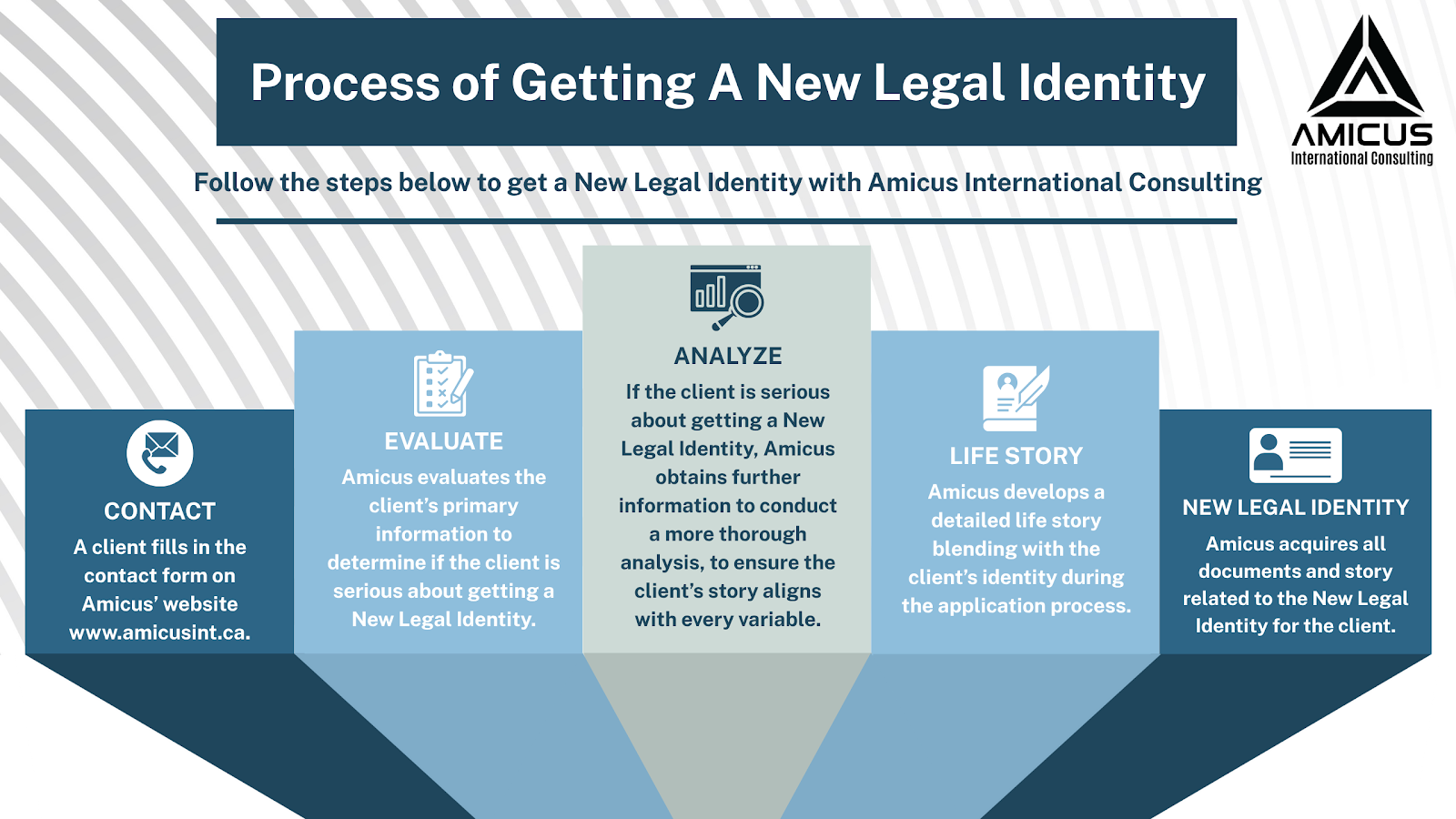
Expert Interview: How Paper Becomes a New Person
We spoke with an Amicus legal identity strategist who coordinates global transitions.
Q: Is this just about legal filings?
A: “Not at all. We’re not just filling out forms—we’re helping someone become someone else in the eyes of every government, database, and digital system. That takes law, tech, and psychology.”
Q: What makes a successful identity change?
A: “Three things: legal recognition in at least one strong jurisdiction, synchronized documentation across borders, and a clean digital profile to match.”
Q: What happens if someone skips a step?
A: “They’re exposed. If a bank or immigration agent sees mismatched data, the whole identity can collapse. That’s why we do full-stack coordination—from court to cloud.”
Case Study #2: Abuse Survivor Escapes to Uruguay
A Canadian woman facing years of stalking after divorce needed total separation. After a sealed name change in British Columbia, Amicus coordinated her residency application in Uruguay. There, she registered her new identity, opened bank accounts, and began a new career—all under legal protection. Her digital profile was also scrubbed, including over 300 mentions in public databases and image searches.
Timeline: From Petition to Person
| Stage | Timeframe |
|---|---|
| Name change | 1–3 months |
| Government record updates | 2–5 months |
| Residency/citizenship | 3–12 months |
| Digital footprint erasure | 3–6 months |
| Full identity rebirth | 9–18 months |
Amicus uses expedited services and jurisdictional layering to reduce risks and delays.
Estimated Cost for Global Identity Reconstruction
| Service | Range (USD) |
|---|---|
| Name change filings and translations | $2,000–$5,000 |
| Document realignment and apostille | $5,000–$10,000 |
| Residency application and legal support | $10,000–$25,000 |
| Second citizenship (if applicable) | $100,000+ |
| Digital identity removal and rebuild | $5,000–$15,000 |
| Full transformation (legal + digital + relocation) | $30,000–$300,000+ |
Amicus offers escrow, milestone billing, and trusted custody of client documents throughout the process.
Case Study #3: From Persecuted Journalist to Anonymous Academic
A Southeast Asian journalist blocked by government media regulators fled the country with a tourist visa. Amicus facilitated his name change through refugee channels in New Zealand, helped him secure permanent residency in Portugal, and advised on academic reentry under a new name. Today, he teaches digital ethics under complete legal identity protection.
Mistakes to Avoid When Rebuilding Your Identity
- Using forged or unofficial documents (automatic red flag)
- Applying for multiple identities in the same country (illegal duplication)
- Failing to synchronize the passport and tax ID updates
- Leaving behind active social media under the old name
- Allowing family, friends, or journalists to link your past to your present
Who Amicus Helps
Amicus only works with law-abiding individuals who meet strict criteria:
- No pending criminal charges
- No intent to defraud creditors, governments, or legal obligations
- Verified safety, privacy, or legal cause for identity change
- Willingness to follow legal processes and jurisdictional rules
Typical clients include:
- Abuse and stalking survivors
- Politically at-risk journalists and activists
- Professionals with reputational damage
- Financial restructuring clients
- Transgender individuals seeking gender-affirming legal ID
- People recovering from online harassment or leaks
Where Amicus Operates Globally
- North America: Canada, U.S. (selected services)
- Latin America: Panama, Paraguay, Uruguay, Mexico
- Europe: Portugal, Poland, Ireland, Georgia
- Asia-Pacific: New Zealand, Thailand (relocation only)
- Caribbean: Dominica, St. Kitts & Nevis
- Africa (limited): South Africa, Seychelles
Conclusion: From Paper to Person—Legally, Permanently, Globally
In a world where your past can follow you anywhere, rebuilding your identity is no longer just a dream—it’s a documented, legal, and life-saving reality. With expert guidance, verified documents, and digital privacy, you can move from who you were to who you need to be—fully recognized, fully protected, and fully you.
Amicus International Consulting leads the global field in lawful identity transformation—helping clients turn paper into person, file into freedom, and secrecy into security.
Contact Information
Phone: +1 (604) 200-5402
Email: info@amicusint.ca
Website: www.amicusint.ca