
Amicus Gives the Full Checklist
Vancouver, BC – As global interest in changing one’s legal identity rises in response to digital surveillance, personal safety threats, and socio-political instability, one question continues to dominate the conversation: Where do you begin?
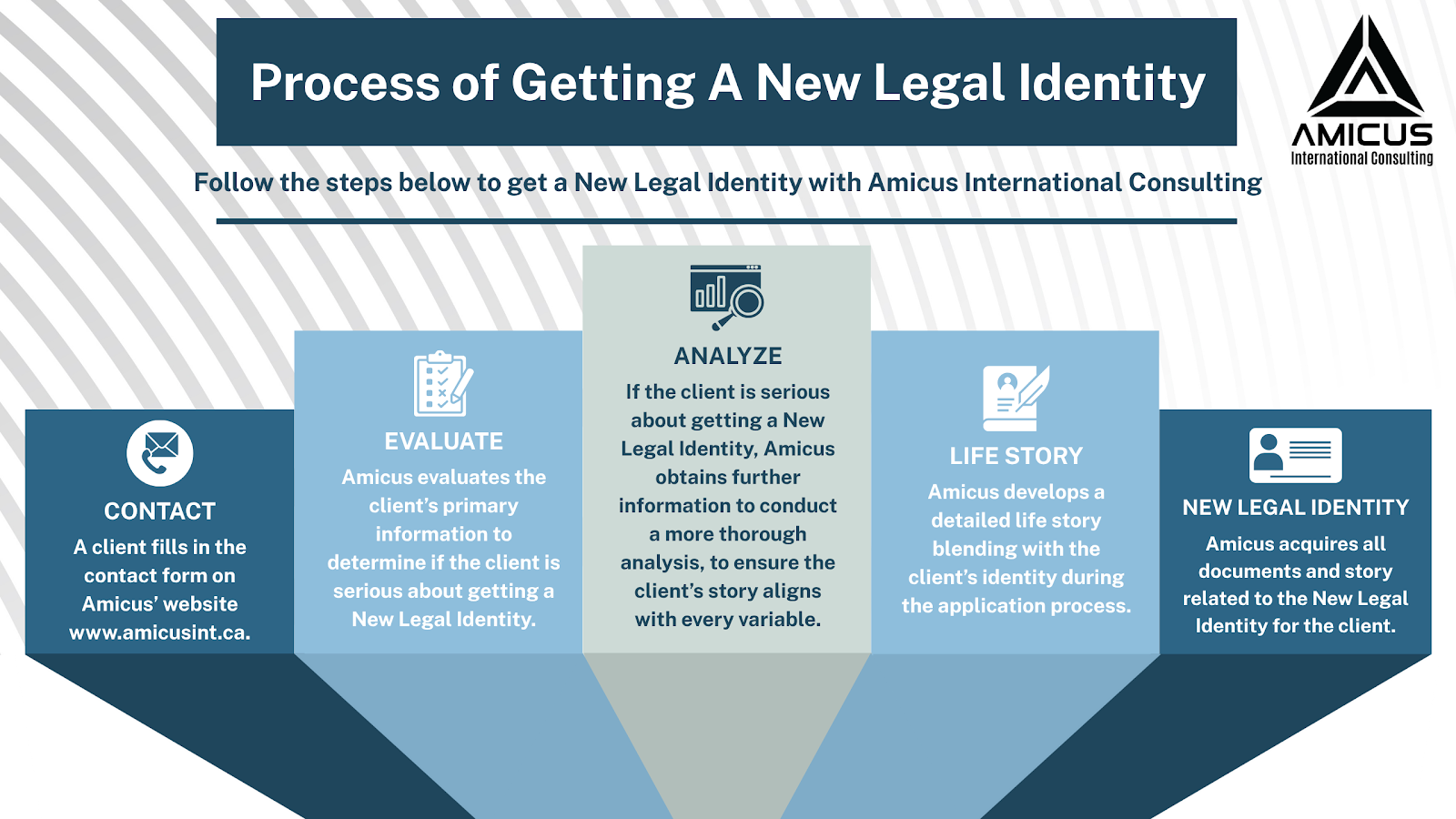
According to Amicus International Consulting, the world’s leading consultancy in lawful identity transformation, starting over isn’t just possible — it’s a methodical process. The firm has released a comprehensive, step-by-step checklist designed to guide individuals through the first stages of a legal identity reset in 2025.
While many imagine identity change as something relegated to espionage, fugitives, or fiction, the reality in today’s climate is far more common — and legally viable. From whistleblowers and domestic abuse survivors to digital nomads and professionals seeking privacy, thousands are turning to legal systems worldwide to obtain new names, fresh passports, and untraceable digital lives.
But what does it take to begin such a monumental shift? Amicus says it all starts with informed preparation, lawful jurisdiction, and a bulletproof record.
Why Legal Identity Change Is Booming in 2025
The need for personal reinvention is at an all-time high. AI-powered facial recognition, public data leaks, financial blocklisting, and political unrest are driving people to seek protection, privacy, and control. But Amicus warns that there is no shortcut to a legal identity change.
“Starting over legally is one of the most complex yet liberating legal procedures in modern society,” says a legal advisor at Amicus. “It requires alignment across civil records, passports, banking documents, and increasingly, your biometric and digital presence. Done incorrectly, you trigger fraud alerts. Done correctly, you gain full independence under international law.”
The Full Legal Identity Change Checklist: First Steps That Matter
- Determine Your Legal Standing and Risk Profile
Before initiating any action, you must evaluate your current legal position. Amicus begins every client relationship with a risk analysis consultation, evaluating:
- Pending legal matters or investigations
- Prior convictions or extradition concerns
- Eligibility for civil document updates
- The presence of international alerts (e.g., Interpol red notices)
- The likelihood of your current identity linking back to future systems
This profile determines how simple — or complex — your identity change journey will be.
- Collect and Protect Core Documents
Legal identity changes start with the original documentation. Most jurisdictions require a trail of authenticated records, including:
- Full-length birth certificate (preferably apostilled)
- Government-issued photo ID (passport, national ID)
- Social security or tax ID registration
- Marriage or divorce certificates
- Utility bills or bank statements for proof of residence
- National police clearance or criminal background certificate
Amicus advises clients to make multiple notarized copies, store digital backups, and use encrypted vaults when transferring sensitive data during the change process.
- Select a Jurisdiction That Supports Identity Reinvention
Location is everything. Choosing a country that legally supports identity change — through court-ordered name change, accessible naturalization, or flexible residency law — is crucial. Recommended options in 2025 include:
- Paraguay: A liberal civil registry and easy-to-obtain permanent residency
- Georgia: Welcomes foreigners with progressive name change laws
- Dominica and Saint Lucia: Citizenship by investment countries with supportive legal frameworks
- Uruguay: Offers humanitarian residency and civil record modification options
- Panama: Friendly Nations Visa and legal name change through notarial acts
Amicus vets these jurisdictions for civil stability, legal transparency, and compliance with international human rights norms.
- Begin the Name Change Process in Your Chosen Jurisdiction
Name change is typically the first formal act in identity reinvention. Depending on the jurisdiction, this can be achieved through:
- Court petition (common in the U.S., UK, Canada)
- Notarial act and government publication (common in Latin America)
- Civil law procedure requiring Gazette publication (e.g., Belize, Panama)
Amicus manages this process end-to-end, ensuring that the new name is defensible in court, reflected in official databases, and prepared for use in future applications.
- Restructure Civil Records Across All Systems
Once a name is legally changed, every connected system must be updated to reflect the change. These include:
- Tax authorities (CRA, IRS, etc.)
- National medical and health systems
- Immigration departments
- School and academic records
- Employment registries
- Real estate deeds, corporate filings, or trust documents
Failing to update even one area can result in mismatched records, accusations of fraud, or denied entry at borders.
- Digital Footprint Removal and Biometric Decoupling
Digital forensics in 2025 is more advanced than ever. Social media, facial recognition, browser histories, and facial scans must be carefully erased or disconnected from your past identity. Amicus performs:
- Deletion of old usernames, social accounts, and email handles
- Deep-scrubbing of online databases and news articles
- Replacement of biometric IDs with new facial scans (where legal)
- Use of privacy-first tools and relocation-based internet identities
This step is critical for anyone seeking true anonymity or needing to escape harassment, surveillance, or stalking.
- Secure Financial Identity Under New Credentials
Financial institutions are some of the strictest when it comes to identity validation. Amicus assists clients in:
- Opening new bank accounts in offshore or residency-linked jurisdictions
- Securing new credit files and tax identifiers
- Creating separate corporate structures or trusts (where applicable)
- Building a compliant financial identity for credit, business, and tax filing
Failure to update financial records could result in frozen accounts or create dual-identity red flags.
- Consider Dual Citizenship or Residency to Reinforce Identity Shift
Acquiring a second residency or citizenship gives a new name and nationality legal strength. Countries where Amicus assists with this include:
- Saint Kitts & Nevis: Citizenship in under 120 days with a government donation
- Panama: Permanent residency available within six months
- Georgia and Paraguay: Long-term pathways to second nationality
- Belize: Visa-free travel and name change opportunities
Dual citizenship provides an additional layer of legal security, facilitating visa-free travel, asset protection, and family relocation.
Case Study #1: American Father Escapes Corporate Doxxing, Moves to Georgia
In 2023, a former U.S. executive faced reputational ruin after false allegations spread online. Amicus facilitated a name change, new residency in Georgia, and total online identity deletion. By 2024, he had obtained a new tax ID, new professional credentials, and relaunched a successful consulting firm with no connection to his former name.
Case Study #2: Political Asylum Applicant Rebuilds in Uruguay
A university professor from the Middle East sought help from Amicus after state-level persecution. The firm arranged a safe exit via Latin America, processed a name change by the Uruguayan civil code, and updated civil records to facilitate permanent residency. Today, she teaches online under her new legal name and is awaiting citizenship.
Case Study #3: Domestic Abuse Survivor Relocates With Her Children
A Canadian woman and her two children legally changed their names and emigrated to Belize with the support of Amicus. All records — academic, medical, and financial — were updated. Their digital past was erased, and today, they live without fear of being located by their abuser.
Expert Interview: “Changing Your Name Isn’t Enough — You Must Change the Systems”
An Amicus legal identity strategist explains the most overlooked reality of starting over:
“Many believe that a name change alone is enough. It’s not. You must align every system — from taxes to online presence to biometric scans — to ensure seamless integration. One loose end and you’re exposed. That’s why people fail when they try to do it alone or through illegal services.”
The expert further emphasized that, by 2025, coordinated digital and legal transformation will be mandatory.
Top Mistakes to Avoid When Starting a Legal Identity Change
- Using unvetted consultants or dark web providers
- Changing only your name and skipping civil system updates
- Leaving biometric identifiers tied to your original identity
- Failing to relocate to a supportive jurisdiction
- Attempting fraud instead of using legal frameworks
How Families, Couples, and Minors Can Begin Together
Amicus supports family-unit reinvention, which includes:
- Petitioning family courts for minor name changes
- Coordinating educational and medical system realignment
- Creating new legal guardianship documents
- Ensuring custody and travel permissions align with new identities
Entire families have relocated and rebuilt lives under full legal compliance with Amicus’s help.
Amicus Services: More Than a Legal Consultant — A Full Transformation Partner
With offices across Latin America, the Caribbean, and Eastern Europe, Amicus offers:
-
- Legal team coordination across multiple jurisdictions
- Document handling and apostille processing
- Financial integration and second residency planning
- Safety strategies for high-risk clients, including abuse survivors and whistleblowers
Conclusion: Your First Step Is Everything
Starting over isn’t about running — it’s about planning. It’s not about hiding — it’s about protecting your rights under international law. Amicus International Consulting offers the world’s most comprehensive, legally compliant approach to identity change. Your first step doesn’t need to be alone or illegal. It needs to be informed, lawful, and supported.
In 2025, the power to reclaim your future starts with a single, legal decision.
Contact Information
Phone: +1 (604) 200-5402
Email: info@amicusint.ca
Website: www.amicusint.ca