
Is It Right to Walk Away From the Past?
VANCOUVER, British Columbia — The concept of legally disappearing—changing one’s name, identity, and even nationality without committing a crime—is no longer the stuff of espionage thrillers or witness protection programs. In today’s world of surveillance capitalism, borderless finance, and increasing authoritarianism, more people are asking not how, but whether they should walk away from their past.
While companies like Amicus International Consulting offer lawful pathways to identity reinvention, the rise of this trend has sparked a growing ethical debate: Is it morally justifiable to sever all ties to your previous identity?
As legal identity changes gain traction across jurisdictions from the Caribbean to Southeast Asia, critics and philosophers alike are weighing in on the topic. Is it simply a legal right? A survival mechanism? Or is it a rejection of accountability and social responsibility?
What Is Legal Disappearance?
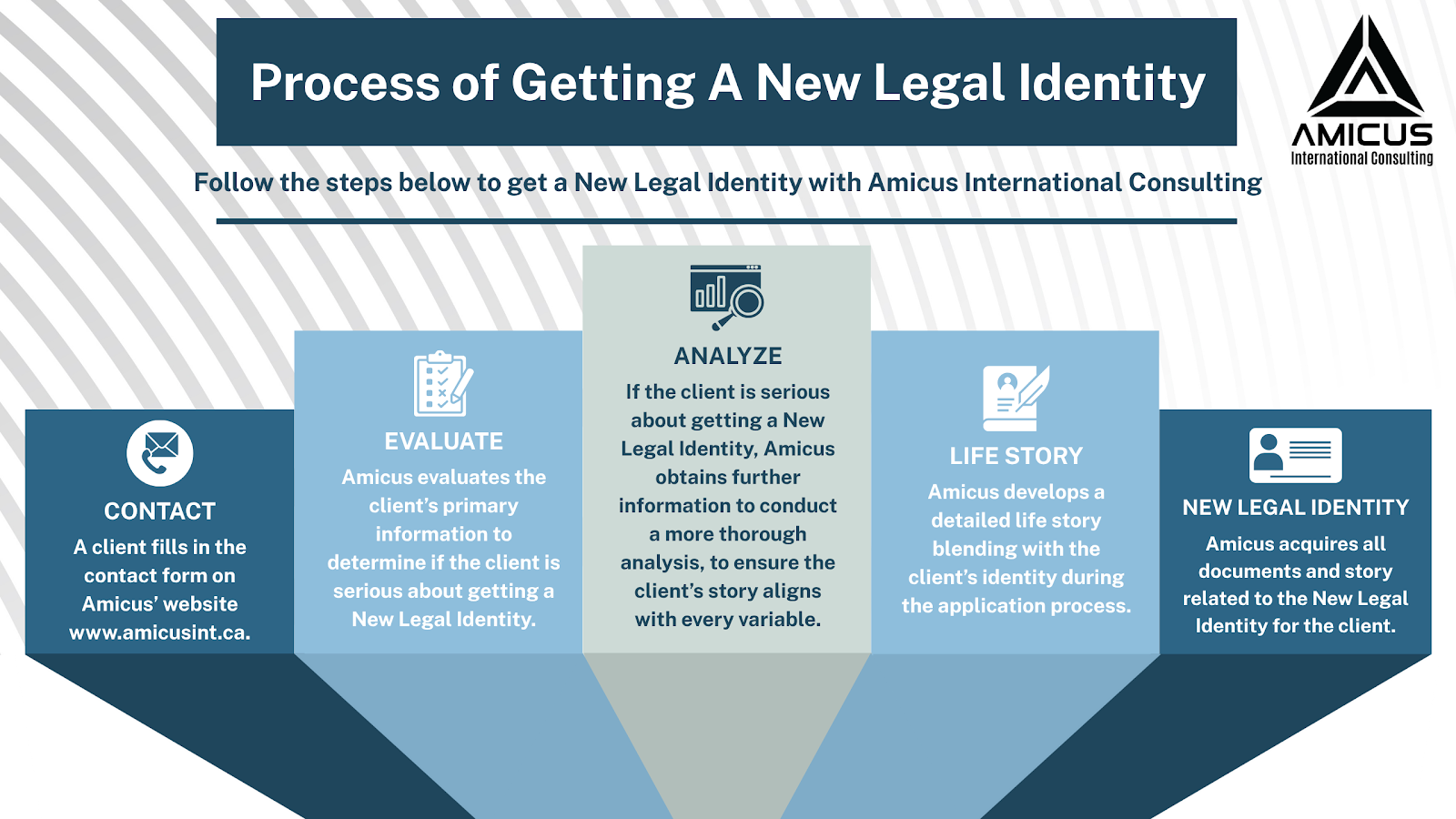
Legal disappearance is the process of transforming one’s identity—legally and transparently—without evading justice or perpetrating fraud. Unlike illegal name changes used to avoid law enforcement, this practice is lawful and executed with governmental or judicial oversight. The process often includes:
- Legal name changes
- Gender and civil status corrections
- Nationality switches through investment, ancestry, or renunciation
- Reissuance of birth certificates and travel documents
- Rebuilding of credit history and financial credentials
According to Amicus International Consulting, a firm that has facilitated over 2,000 legal identity transformations in the last five years, the demand for lawful disappearances has surged by 38% year-over-year since 2021.
Ethical Questions: Who Has the Right to Disappear?
At the heart of the debate is the question of who is entitled to a clean slate. Advocates argue that everyone, regardless of background, should be able to choose a future free from surveillance, harassment, or social judgment. For some, it’s an act of survival.
Case Study: Escaping Abuse in the UK
A British woman who endured years of domestic violence, compounded by online harassment, used legal avenues to change her name and relocate to Belize. Working with Amicus, she secured a second residency and citizenship through investment, rebuilt her financial life, and embarked on a new chapter. “The past wasn’t just painful—it was dangerous,” she said. “My decision wasn’t about evasion. It was about survival.”
But not all stories are as clear-cut. Others walk away from bankruptcies, family estrangements, or even their responsibilities. This raises the question: when does self-preservation cross into self-deletion?
A Moral Dilemma: Responsibility vs. Reinvention
According to Dr. Laura Pennington, a professor of ethics at the University of British Columbia, the morality of legal disappearance depends heavily on intent.
“If someone is fleeing obligations—whether child support, debt, or lawsuits—simply using identity change as a reset button may be legally permissible in some cases, but morally fraught,” she said. “However, if the individual is escaping abuse, persecution, or coercive systems, then disappearance can be a form of reclaiming agency.”
In other words, not all identity changes are created equal. The ethics depend not only on what is done, but also on why.
Case Study: From Debt Trap to Dubai
A German entrepreneur, burdened by failed business ventures and legal debts, sought a fresh start in Dubai under a new name and with an Emirati ID obtained through strategic residency. Though his escape was legal, his creditors were left unpaid. Critics argue that while this move was within the boundaries of the law, it undermines the moral social contract.
Yet, Amicus emphasizes that it does not assist clients involved in fraud or fleeing court judgments. The firm conducts a comprehensive legal background audit before initiating any identity change process.
The Role of Digital Privacy in the Ethics Debate
In today’s landscape of biometric data harvesting, facial recognition, and constant surveillance, some see legal disappearance not as a luxury but as a human right.
Interview With a Legal Consultant at Amicus
Q: Do clients often grapple with the morality of disappearing?
A: Constantly. Most are not running from the law—they’re running from trauma, surveillance, or ruined reputations. We work closely with each individual to ensure their intentions are ethical and that their legal strategy aligns with global norms.
Q: Where does Amicus draw the line?
A: We will not help individuals involved in active legal proceedings, fraud, or crimes of any kind. We verify records across multiple jurisdictions, conduct background checks, and collaborate with outside legal experts. We also decline over 40% of applicants.
Q: What misconceptions do clients have about the process?
A: Many believe changing your name is the entire solution. In reality, legal identity change is a process involving civil documentation, international compliance, and often digital reengineering. It must be handled lawfully and transparently to remain effective and safe.
When Disappearing Becomes Socially Necessary
In authoritarian states, LGBTQ+ individuals, whistleblowers, and journalists have increasingly used legal disappearance as a tool of protection. In such cases, identity change is less about escaping accountability and more about escaping state-sponsored targeting.
Case Study: From Myanmar to Malaysia
A former activist from Myanmar, facing detainment after political protests, fled the country using a student visa, then naturalized in Malaysia. Amicus assisted in a legal name change, nationality reassignment, and the digitization of new credentials under UN-supported privacy frameworks. His case is now used as a model for compliant humanitarian identity change.
Society’s Role: Do We Allow Redemption or Perpetuate Records?
A key philosophical question in this debate is whether society must allow people to start over. The permanence of digital records, old news reports, and AI-based surveillance means that even after serving time or paying debts, people are often still defined by their worst moments.
Should society create pathways to true reinvention, or does every mistake become permanent?
Privacy Advocates Weigh In
According to Maxene Chan, a digital privacy analyst based in Singapore, “The ability to start over is increasingly linked to the right to disappear from search engines and surveillance. We’re moving toward a future where reinvention is not just a legal or moral issue—but a technical one.”
Chan warns that unless people have access to legal disappearance tools, they may turn to illegal channels—such as fake documents, dark web passports, and identity fraud—to escape their data shadow.
What Makes Disappearing ‘Right’? A Framework for Ethical Evaluation
Ethics experts offer a general guideline to evaluate whether a legal disappearance is justifiable:
- Transparency of Intent – Is the motivation to avoid accountability or to ensure safety and dignity?
- Harm Principle – Does the action avoid direct harm to others (e.g., unpaid victims, abandoned children)?
- Restorative Path – Is there a commitment to living responsibly under the new identity, rather than abusing the reset?
- Legal Compliance – Is the process handled through legitimate, lawful means rather than deception or fraud?
When these principles are met, legal disappearance can arguably be a tool of social justice rather than moral evasion.
The Business of Reinvention: Responsible Providers Matter
As legal identity change becomes more normalized, ethical service providers like Amicus differentiate themselves by maintaining strict eligibility standards, utilizing licensed legal agents, and refusing to process any requests that involve criminal activity or fraud.
The firm also partners with trauma counsellors, cybersecurity experts, and immigration attorneys to provide wraparound services, not just name changes, but life rebuilding.
The Danger of DIY Disappearances
Unethical disappearance can quickly escalate into illegality. Fraudulent documents, bribed officials, and fake identities often lead to criminal liabilities, resulting in extradition, incarceration, or inclusion on international sanction lists.
According to Interpol, the use of fraudulent documents increased by 27% from 2022 to 2024, primarily driven by unscrupulous identity brokers operating in Eastern Europe and Central Asia. These operators often charge tens of thousands of dollars and leave clients vulnerable to prosecution.
Amicus has warned clients that proper safety comes only from lawful reinvention, not shortcuts or deception.
Can Legal Disappearance Coexist With Accountability?
It’s a paradox: the desire to disappear often stems from past burdens. But what of those who were affected by the person’s prior life? Should they be informed? Should they be compensated?
Ethical identity change providers recommend that, whenever possible, clients resolve their unresolved obligations—whether legally or financially—before initiating the process.
This also avoids complications when financial or legal institutions perform due diligence on the newly issued identity.
Final Thoughts: A Legal Right, With Ethical Weight
As identity becomes increasingly digitized and immutable, the ability to start over becomes more valuable—and increasingly complex from an ethical perspective. While it’s legally possible to build a new identity in jurisdictions like Paraguay, Belize, the Philippines, or Cambodia, the question remains: should you?
Legal disappearance, when conducted transparently, responsibly, and with the assistance of ethical professionals, can be a form of self-preservation and personal growth. But without intent, accountability, or legal precision, it risks becoming just another form of running away.
Contact Information
Phone: +1 (604) 200-5402
Email: info@amicusint.ca
Website: www.amicusint.ca