
Amicus Answers What It Takes to Get a New Identity
Vancouver, BC – Starting over might sound like a fantasy. A new name, a new life, a clean slate — the idea has fueled countless novels, documentaries, and real-life escape stories. But is it possible to walk away from your old identity and begin anew — legally, safely, and without breaking the law? Amicus International Consulting, a global authority in legal identity change, says the answer is yes — but only if you’re prepared for what it truly takes.
A Legal Identity Change Isn’t Just Paperwork — It’s a Life Transformation
The process of obtaining a new legal identity in 2025 is complex, regulated, and demands strategic execution across multiple jurisdictions. For individuals facing threats to their safety, reputational damage, or simply seeking a second chance, Amicus International Consulting guides them through the complex maze of legal requirements, ethical standards, and international compliance.
Contrary to popular belief, creating a new identity does not mean faking documents or fleeing under the cover of night. It involves legitimate legal frameworks, such as name changes, second citizenships, and new residency permits, all processed through lawful channels with official documentation and international recognition.
The Five Pillars of Legal Identity Reinvention
According to Amicus, the path to starting over legally requires a structured, multi-phase approach:
- Legal Name Change:
Changing your name is a fundamental step in identity reinvention. In most democratic countries, legal name changes can be obtained through local courts, provided the applicant is not under criminal investigation. Countries like Canada, New Zealand, and Panama have relatively streamlined procedures, although each has its own specific residency or documentation requirements. - Relocation to a Jurisdiction with Friendly Identity Laws:
Several nations offer residency programs, citizenship-by-investment options, or humanitarian identity programs. These countries — including Paraguay, Dominica, and Georgia — maintain legal avenues for foreigners to establish new lives under new identities without engaging in fraud. - Citizenship or Second Passport Acquisition:
Whether through ancestry, naturalization, or investment, gaining a new citizenship is often the most potent step in securing a future under a new identity. Amicus emphasizes that legal compliance, financial transparency, and background checks are crucial at this stage. Countries like Saint Lucia and Vanuatu still offer competitive options. - Civil Record Alignment:
A new legal identity only works when all records — including birth certificate, tax ID, health registry, and bank credentials — are updated to match. Amicus collaborates with clients to ensure synchronization across government and private databases, thereby reducing the likelihood of red-flag mismatches during travel, banking, or employment. - Financial, Digital, and Travel Reintegration:
A new identity also means establishing new credit, setting up a legal bank account, and ensuring travel documents are valid and internationally recognized. This may include resetting biometric data, such as passport scans or facial recognition profiles — something that is growing in importance in 2025’s surveillance-heavy environment.
Case Study #1: Starting Over After Domestic Abuse in Canada
A 37-year-old woman from British Columbia approached Amicus in early 2024 after escaping a long-term abusive relationship. With the court’s permission, she changed her name, relocated to Belize, and obtained second residency through a digital nomad visa. Amicus helped her restructure her financial footprint and disconnect her digital presence. She now runs an online business and has complete control over who contacts her and when.
Case Study #2: A South African Whistleblower’s Flight to Safety
A South African government contractor feared retaliation after exposing corruption in public procurement. He worked with Amicus to obtain legal residency in Uruguay, changed his name legally under Uruguayan civil law, and moved his financial accounts offshore. With Amicus’s assistance, his digital identity was scrubbed and re-created under a new legal framework.
Case Study #3: Rebuilding a Life After Bankruptcy in the U.S.
A former small business owner in the Midwest faced public financial collapse. He relocated to Paraguay, legally changed his name, and obtained second citizenship. Amicus coordinated new tax registrations and secured legal employment under his new identity. Now debt-free and legally protected, he’s back on his feet.
Interview With an Expert: “People Think It’s About Hiding. It’s Not.”An
Amicus legal advisor, who requested anonymity for operational reasons, explains:
“People misunderstand legal identity change. It’s not about avoiding justice — it’s about protecting your right to start fresh. If you follow the law, work with vetted advisors, and document every step, then the system can support a lawful transition. But shortcuts lead to prison or worse.”
He added that “real cases of abuse survivors, persecuted journalists, and financially ruined professionals have shown us that starting over can be both ethical and legal. But it requires patience, precision, and legal rigour.”
The Biggest Misconceptions About Legal Identity Change
According to Amicus, these are the five most common myths that people believe — and the truth behind them:
- Myth 1: “You need to disappear illegally to start over.”
Fact: Legal identity change is possible in more than 20 countries. Some frameworks respect human rights and offer new legal identities without fraud. - Myth 2: “Only criminals or fugitives try to change identity.”
Fact: Many clients are survivors of domestic violence, financial ruin, political persecution, or harassment. Most have no criminal record at all. - Myth 3: “You can buy a fake passport online.”
Fact: Any online fake passport service is a scam or a setup. Fundamental identity changes involve legal documents, not forgeries. - Myth 4: “Once you change your name, you’re free.”
Fact: Without updating other records — financial, digital, tax — you can be traced or denied access to services. - Myth 5: “I can do this alone.”
Fact: The legal and digital steps involved in rebuilding identity are complex. Without expert guidance, many fall into traps that flag them to Interpol, border agents, or financial authorities.
What About Children or Families?
Amicus reports a growing number of families seeking collective identity changes — often for reasons related to domestic violence, political unrest, or religious persecution. “Entire families have restarted their lives in safe, legally compliant ways,” the firm notes. “We’ve helped parents ensure their children grow up free of past traumas and under secure, new identities.”
Emerging Trends in 2025: Where the Law Supports Reinvention
Some of the safest and most legally accommodating countries for starting over with a new identity include:
- Paraguay: Residency available through low-cost investment; name changes processed through local courts.
- Panama: Strong banking and second residency frameworks. Digital nomads and entrepreneurs are welcome.
- Dominica and Saint Kitts & Nevis: Citizenship by investment remains a legal and globally recognized option.
- Georgia: Progressive name change laws and digital privacy policies.
- Belize offers a peaceful lifestyle and anonymous company structures for digital entrepreneurs.
Amicus Warns: Don’t Trust “Too-Good-To-Be-True” Identity Change Services
The firm has repeatedly issued warnings about fake identity services that operate through messaging apps and unverified websites. “If they promise a passport in 48 hours without a background check, it’s either fake or illegal,” the legal team advises.
Instead, Amicus encourages all applicants to verify the jurisdiction, legality, and government compliance of any process they pursue.
Real Identity Change Is a Process — Not a Product
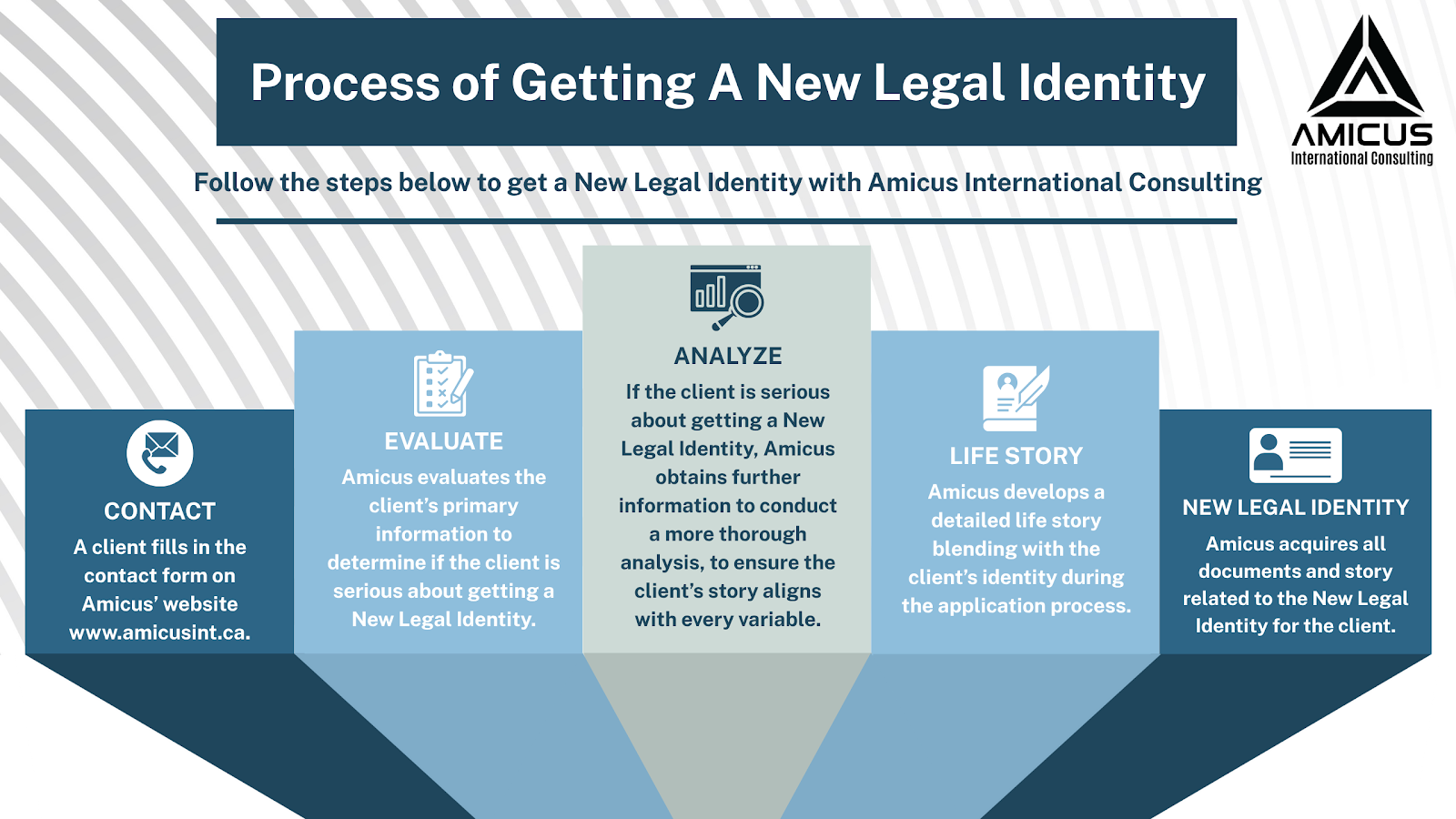
Amicus International emphasizes that legal identity transformation is a step-by-step process that should be tailored to the individual’s legal situation, jurisdictional standing, and personal needs. The company discourages “one-size-fits-all” solutions and prioritizes safety, legality, and international compliance.
Conclusion: Is It Hard to Start Over Legally? Yes. But It’s Worth It.
The journey to a new legal identity is neither fast nor simple. However, for those who navigate the correct legal channels, the outcome is freedom — freedom from abuse, fear, financial ruin, and reputational collapse.
“Reinvention is not fantasy,” says the Amicus legal team. “It’s a legal right — but only if you do it the right way.”
Contact Information
Phone: +1 (604) 200-5402
Email: info@amicusint.ca
Website: www.amicusint.ca