
A Global Financial Identity Revolution Gains Institutional Recognition
VANCOUVER, British Columbia — Once considered a tool for elite privacy or fringe offshore banking, the banking passport is now entering the mainstream — and attracting the attention of global financial institutions.
In recent reports and closed-door meetings, the International Monetary Fund (IMF) has acknowledged the growing role of banking passports in supporting lawful cross-border finance, de-risking financial systems, and expanding access to underserved populations.
Amicus International Consulting, a global advisory firm specializing in financial mobility, legal identity restructuring, and offshore compliance, breaks down the IMF’s evolving view on banking passports, what it means for clients and regulators, and how this trend will reshape international banking in the decade ahead.
What Is a Banking Passport, and Why Is It Gaining IMF Attention?
A banking passport is not a physical document, but a structured legal identity package that enables an individual or entity to:
- Open financial accounts in multiple jurisdictions.
- Comply with anti-money laundering (AML) and KYC protocols.
- Operate internationally without being penalized for high-risk nationality, political exposure, or regional instability.
It typically includes:
- A legally obtained second citizenship or residency.
- A Tax Identification Number (TIN) from a compliant jurisdiction.
- A registered International Business Corporation (IBC).
- Consistent proof of residence, income, and purpose of funds.
Why the IMF is watching: These layered identity structures are being increasingly used to navigate the complex compliance demands of global finance without resorting to illegality, especially as risk-scoring, sanctions, and digital surveillance tighten.
The IMF’s 2024 Financial Identity Inclusion Memo.
In its 2024 internal briefing paper titled “Financial Identity Access for the Mobile Economy,” the IMF outlined a new focus on:
- Structured cross-border identity portfolios as a tool for risk-based onboarding.
- Encouraging jurisdictions to develop interoperable digital financial IDs.
- Supporting identity solutions that do not discriminate based on nationality alone.
Although the term “banking passport” was not formally used, Amicus confirmed that several sections referenced legal structures that align precisely with how its banking passport solutions are built.
Quote from IMF policy memo:
“Access to lawful banking services should be based on transparency, not geopolitical origin. Structured identity frameworks offer a means of de-risking without exclusion.”
Global Implications of the IMF’s Position.
If adopted into formal IMF recommendations, this shift would:
- Validate the legal use of second citizenships and structured identities in financial access.
- Influence member states’ treatment of foreign bank applicants.
- Encourage compliance systems to distinguish between structured transparency and opaque risk.
For clients, this means:
- Greater institutional acceptance of banking passport frameworks.
- Reduced onboarding resistance from global banks.
- Enhanced mobility of assets without reputational compromise.
For regulators, it signals:
- A shift from nationality-based risk assumptions.
- Emphasis on documented, not defaulted, compliance narratives.
Case Study: IMF-Affiliated Economists Support Reform in Caribbean CBI Jurisdictions
In late 2023, IMF consultants advised several Caribbean nations to reform their Citizenship by Investment (CBI) programs by:
- Mandating pre-banking compliance reviews.
- Including TIN issuance upon naturalization.
- Integrating digital ID modules to ease banking passport creation.
Countries like Antigua and Dominica responded with policy adjustments that now directly support structured banking passports.
Amicus clients using passports from these jurisdictions have since reported:
- Higher success rates in account openings.
- Faster onboarding with fintech and private banks.
- Fewer compliance flags in FATF-sensitive countries.
Why the IMF Shift Is Significant
For decades, banking identity was tied to:
- Place of birth.
- One passport.
- One national tax regime.
But with over 281 million migrants globally, and a surge in cross-border entrepreneurs, this model no longer works. The IMF’s acknowledgment of structured mobility-based identities is a nod to reality.
Key Points from the IMF’s Emerging Position
✅ 1. Legal Mobility Is Not a Threat
The IMF distinguishes between lawfully layered identities and fraudulent duplication. Banking passports, when built transparently, support compliance — not avoid it.
✅ 2. Second Citizenship Can Reduce Risk
Rather than hiding behind nationality, some individuals gain a second passport to escape unstable regions and integrate into lawful financial systems.
✅ 3. Consistency Is Key
Structured identity systems — including banking passports — provide banks with a clear, verifiable narrative. The IMF supports systems that standardize transparency across jurisdictions.
✅ 4. Institutional Design Matters
Jurisdictions offering second citizenship or flexible residency should incorporate banking passport needs into program design — ensuring TIN issuance, CRS compliance, and documentation integrity.
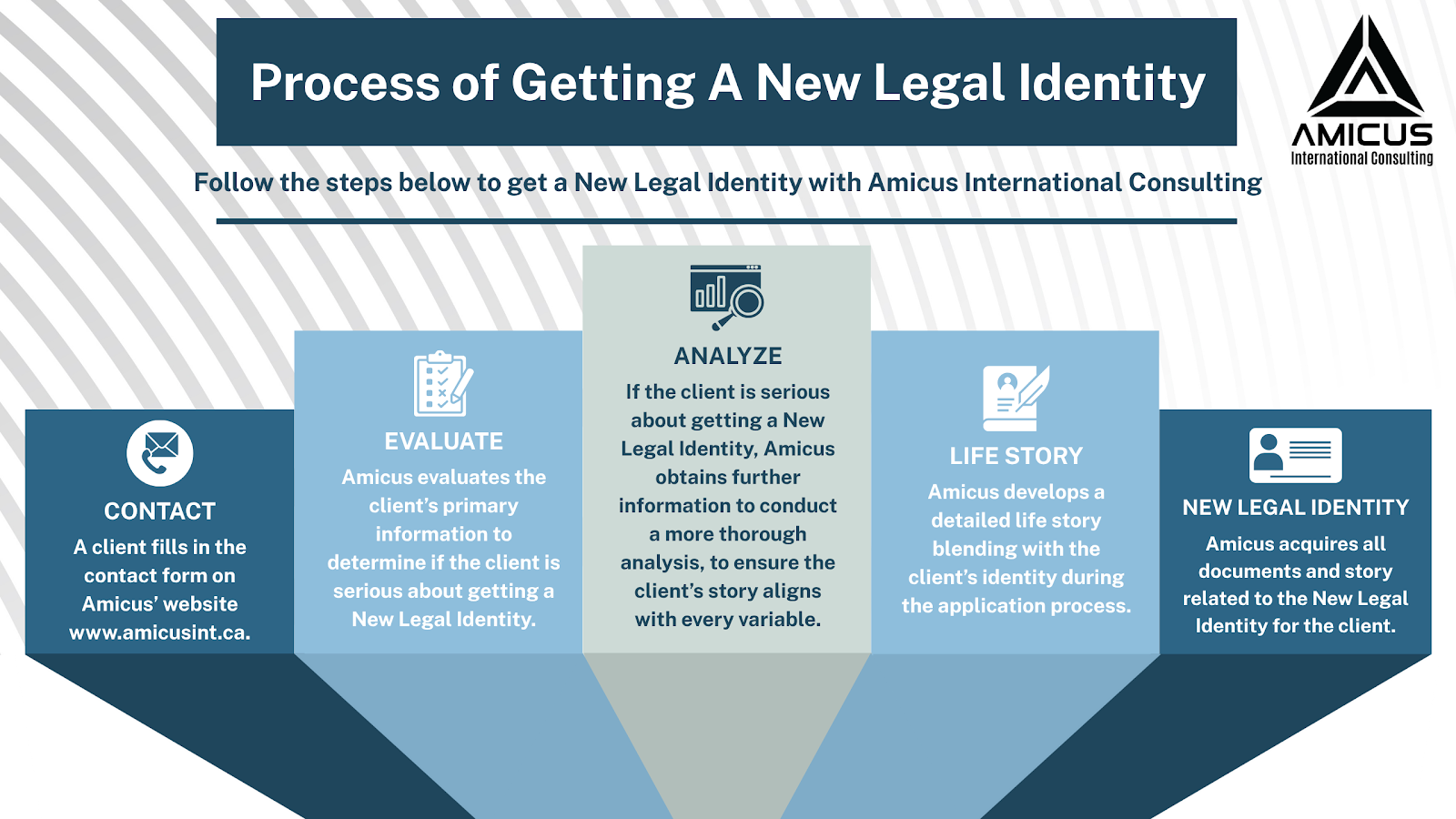
Amicus’ Role: Building the Financial Identity Infrastructure.
Amicus International Consulting has helped over 1,200 clients in the past three years design banking passports that
- Align with CRS and FATCA.
- Reduce risk-based rejection.
- Enable lawful global asset mobility.
Its services include:
- Second citizenship acquisition.
- Company registration with real economic substance.
- Global TIN registration and reporting.
- KYC documentation preparation.
- Banking introduction and onboarding assistance.
The firm also advises several Caribbean, European, and Latin American governments on aligning their policies with IMF and FATF standards.
Case Study: Investor Avoids AML Rejection Through IMF-Aligned Banking Passport
A Brazilian investor and philanthropist attempted to open a Swiss private bank account but was denied due to inconsistencies in residency, TIN, and fund movement.
With Amicus:
- He secured St. Lucia citizenship.
- Filed for EU TIN via residency in Malta.
- Established a BVI holding company for his fund activities.
- Built a full banking passport dossier with notarized and apostilled documentation.
The same Swiss institution onboarded him within 45 days, noting “enhanced compliance clarity” as the justification.
Digital Banking Passports on the Horizon?
The IMF has also begun supporting research into Digital Legal Identity Frameworks (DLIFs) — decentralized or blockchain-based IDs that could:
- Replace manual compliance document submission.
- Include biometric, jurisdictional, and legal status metadata.
- Integrate with core banking onboarding systems.
Amicus is already developing:
- Blockchain-verified banking passport attestations.
- API-connectable KYC bundles.
- Jurisdiction-stamped innovative contract structures for offshore accounts.
Why Banks Care About IMF Positioning
Financial institutions worldwide calibrate their policies based on IMF and FATF guidance. A positive stance on banking passports means:
- Greater clarity in compliance manuals.
- Lower rejection rates for dual nationals.
- Improved onboarding efficiency.
Especially in regions like:
- Switzerland
- Singapore
- Liechtenstein,
- Mauritius, and
- UAE,
where banking regulators are closely aligned with IMF frameworks, this can reduce friction for Amicus clients, and create safer environments for lawfully mobile capital.
Case Study: Crypto Entrepreneur Uses IMF-Backed Policy to Regain Banking Access.
A Turkish crypto platform founder lost banking access after being flagged as high risk due to nationality and crypto exposure.
Working with Amicus:
- He acquired Vanuatu citizenship (soon shifting to Malta).
- Registered his platform in the Dubai International Financial Centre (DIFC).
- Reorganized his identity and KYC documents into a banking passport.
Leveraging IMF-recognized documentation principles, he reopened accounts in Hong Kong and Zurich, which are now fully compliant and audit-ready.
The Broader Trend: Sovereign Identity and Financial Fluidity
Banking passports are just the start. The IMF sees a global shift toward:
- Dynamic identity structures: Fluid legal identities that reflect residence, citizenship, income source, and jurisdictional exposure.
- Mobility-based compliance: Compliance built around movement patterns, rather than static assumptions about the home country.
- Cooperative jurisdiction modelling: Countries designing identity and banking policy to attract mobile but compliant capital.
This means that individuals with properly layered identities will not only gain access to banking but also influence regulatory innovation.
What Clients Should Do Now
- Begin your second citizenship process through legal, government-approved programs.
- Align your TIN and residency with your future financial goals.
- Collaborate with advisors like Amicus to structure your banking passport following IMF-friendly standards.
- Avoid ad hoc identity mixing — ensure documentation is clean, consistent, and verified.
- Prepare for API-based onboarding: your banking passport should be digitally interoperable.
Conclusion: The IMF Has Spoken — Banking Passports Are Here to Stay.
Once sidelined or misunderstood, the banking passport is now being recognized by the world’s most powerful financial institutions as a critical solution to global identity inequality and the complexity of cross-border compliance.
Amicus International Consulting continues to lead in this space, ensuring clients not only navigate this transition but also shape it.
? Contact Information
Phone: +1 (604) 200-5402
Email: info@amicusint.ca
Website: www.amicusint.ca
Follow Us:
? LinkedIn
? Twitter/X
? Facebook
? Instagram
About Amicus International Consulting:
Amicus International Consulting is a leading advisory firm specializing in second citizenship, offshore compliance, banking passport construction, and legal identity transformation. With clients in more than 50 countries, Amicus builds compliant pathways to lawful financial sovereignty across borders and systems.