
Examining Why People Attempt Pseudocide, What Pop Culture Gets Wrong, and the Emotional Aftermath
Vancouver, BC — In a world overwhelmed by personal debt, social shame, legal troubles, and digital surveillance, the idea of faking one’s death—pseudocide—can appear not only tempting, but in some cases, psychologically irresistible. It’s the ultimate reset button: no more bills, no more blame, no more fear. Just freedom.
Yet beneath the surface of this modern myth lies a far darker truth. Pseudocide is rarely thriving, often illegal, and almost always rooted in unaddressed psychological trauma.
According to Amicus International Consulting, a global leader in legal identity change and second citizenship solutions, the road to reinvention must never be paved with deception. Instead, real escape from crisis begins with lawful transformation, not fantasy-driven disappearance.
This release explores the psychological drivers behind pseudocide, the misconceptions fueled by media portrayals, and the emotional wreckage left behind, not only for the person vanishing but for the loved ones they leave behind.
Why People Fake Their Death: A Psychological Deep Dive
The decision to fake death is rarely impulsive. Instead, it is typically a result of cumulative psychological strain—a response to overwhelming life circumstances where traditional escape routes seem blocked or impossible.
Amicus analysts identify the following psychological triggers as common precursors:
- Shame and Public Disgrace
People facing public scandal—such as executives involved in financial fraud, or professionals accused of misconduct—may feel that death (even a faked one) is preferable to living with disgrace. The loss of status, respect, or professional viability becomes intolerable.
- Legal or Financial Peril
The fear of incarceration or overwhelming debt drives some individuals. Business collapse, looming lawsuits, or tax evasion cases can push people to consider desperate measures. They perceive pseudocide as a way to wipe the slate clean and avoid punishment.
- Relationship Trauma or Abuse
Victims of emotional or physical abuse, stalking, or coercive relationships may see death faking as the only means of permanent escape. This group is often under-supported by legal systems, prompting them to attempt dramatic self-erasure.
- Untreated Mental Illness
Undiagnosed or untreated conditions like PTSD, bipolar disorder, borderline personality disorder, or major depression can distort reality to such a degree that pseudocide appears as a rational or even noble option.
- Fantasy-Driven Obsession
Some individuals—especially those influenced by the media—become obsessed with the idea of vanishing and starting anew. These cases are driven more by thrill-seeking and self-delusion than necessity.
Case Study: The Novelist Who Tried to Become His Character
In 2022, a mid-tier crime novelist in the UK, facing bankruptcy and professional decline, staged a car crash and fled the scene wearing clothing similar to that of one of his fictional protagonists. He attempted to cross into Spain by bus using forged documents.
He was caught less than 10 days later, flagged by biometric surveillance at a transport hub in Barcelona.
His bank accounts were under surveillance, and his internet searches—ranging from “how long before a missing person is declared dead” to “fake passport from Portugal”—were already known to investigators.
Psychological evaluation revealed a delusional breakdown and identification with his fictional characters. He served 18 months in prison.
Pop Culture’s Dangerous Love Affair with Reinvention
From Breaking Bad and Gone Girl to Dexter and The Talented Mr. Ripley, fiction has glamorized disappearing as both a thrilling escape and an elegant solution. Movies and series frequently depict identity change as a straightforward endeavour, involving little more than a fake ID and a clever disguise.
This portrayal is not just wrong—it’s dangerous.
Myths that Fuel Bad Decisions:
- Myth 1: “People disappear all the time and are never found.”
Reality: Global surveillance, travel databases, and biometric technology make long-term disappearance exceedingly rare. - Myth 2: “If I go off the grid, no one can track me.”
Reality: Phones, online behaviour, and even DNA can leave trails even years after a disappearance. - Myth 3: “I’ll fake my death, wait it out, then come back.”
Reality: Insurance fraud, police investigations, and false declaration of death laws can result in lengthy prison sentences—even if the original reason was non-criminal.
The Emotional Toll of Faking Your Death
Contrary to media depictions, people who fake their deaths rarely live carefree lives. Constant anxiety, inability to connect with others, and fear of being found out create immense emotional strain.
The Personal Cost:
- Permanent Isolation: Relationships must be abandoned. New ones are built on lies.
- Paranoia: Every security camera, passport check, or internet login feels like a trap.
- Guilt: The impact on family and friends is deep, spouses traumatized, children emotionally scarred, and communities confused.
- Loss of Legal Access: Healthcare, housing, banking, and even fundamental rights become unavailable under a false identity.
When Disappearance Is Legal: What Amicus Offers
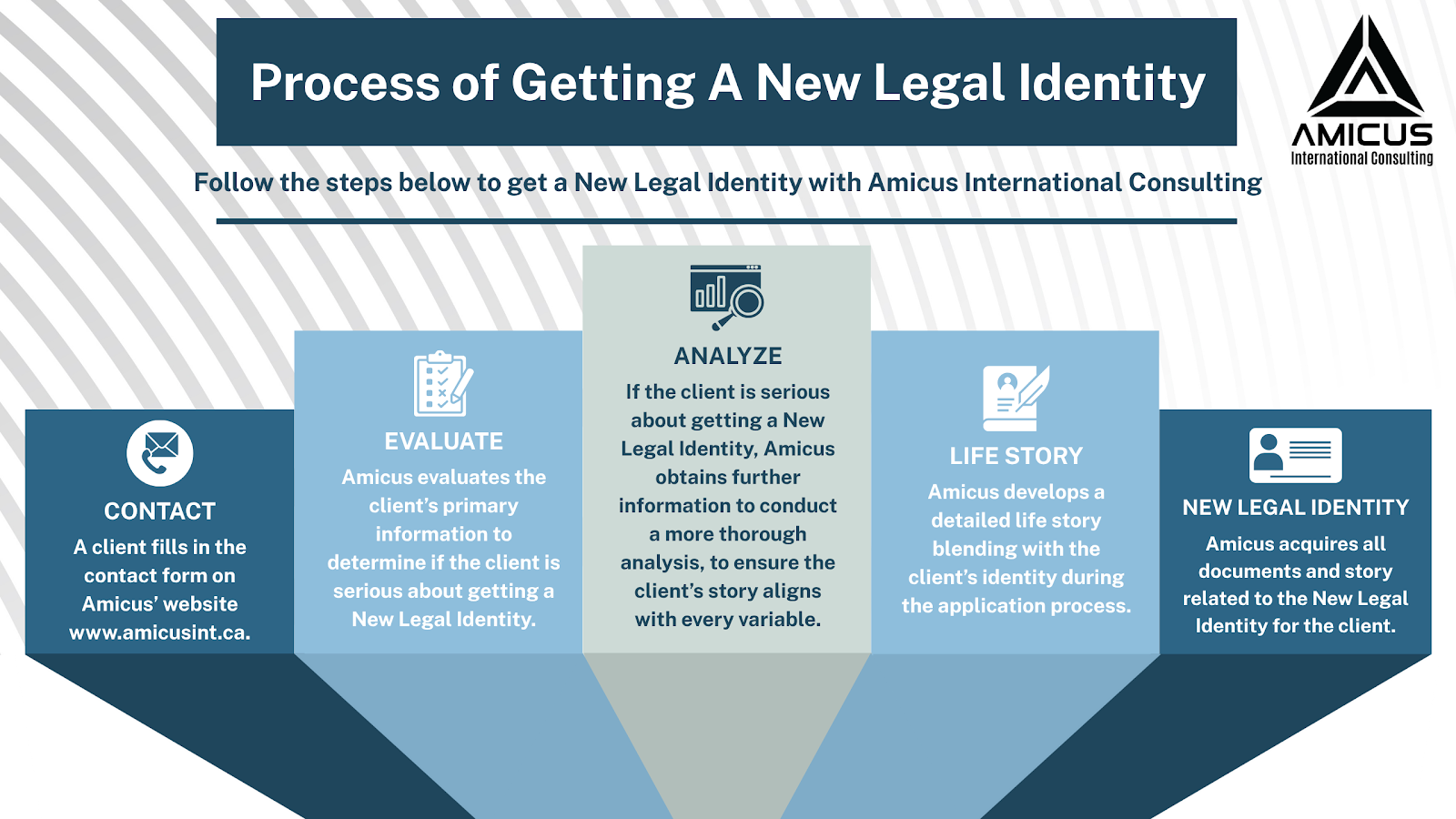
Amicus International Consulting provides an ethical, secure, and legal alternative to faking your death. Their services are grounded in international law and tailored to those in genuine need of protection, anonymity, and relocation.
- Second Citizenship via Legal Investment
Clients can lawfully acquire a second nationality through government-endorsed programs, including:
- St. Lucia
- Antigua and Barbuda
- Portugal
- Turkey
- Vanuatu
These passports are legal and globally recognized, allowing for a new chapter without risk of prosecution.
- New Legal Identity and Name Change
Working with jurisdictions that honour gender transition, witness protection, or privacy-based name changes, Amicus provides full legal support to clients looking to disconnect from unsafe pasts.
- Digital Identity Cleanup
Amicus teams use legal requests and privacy regulations (like GDPR and PIPEDA) to erase digital traces and disassociate old names, addresses, or metadata from the new identity.
- Asylum and Refugee Relocation
For clients facing persecution, violence, or state-sponsored retaliation, Amicus helps build legal asylum cases supported by human rights law, ensuring protection and dignity.
Case Study: From Domestic Terror to Quiet Freedom
A woman in Central Europe, previously married to a member of a neo-nationalist militia group, was subject to years of abuse and coercion. When her former partner was arrested, she feared retaliation from his network. She initially considered suicide or faking one.
Instead, she contacted Amicus.
Within eight months, she:
- Completed a legal name change
- Relocated under a new identity through a CBI program in the Caribbean
- Received trauma counselling and support to build a small business in her new home
She now mentors other women fleeing extremism and violence.
How the Law Views Faked Deaths
Faking one’s death—whether through staged accidents, forged documents, or medical falsifications—is prosecuted in many jurisdictions as:
- Fraud
- Obstruction of justice
- Conspiracy
- False statements to authorities
- Insurance fraud
Penalties range from 3 to 20 years in prison, often with multiple charges stacked together. Additionally, reintegration into society after being exposed is nearly impossible.
The Amicus Code of Ethical Reinvention
Amicus International only accepts clients with verifiable threats, such as:
- Credible death threats
- State persecution
- Documented stalking or abuse
- Legal disadvantages due to identity, nationality, or whistleblowing
Each client undergoes extensive background screening. The company’s legal department collaborates with international attorneys and human rights organizations to ensure every identity change is lawful and protective, not exploitative.
Case Study: Digital Artist, Digital Threat
A transgender artist in the Middle East was targeted online after displaying political artworks critical of her home country’s regime. Her social media was doxxed, her passport invalidated, and she feared physical harm.
With Amicus’ help, she:
- Applied for asylum in Canada
- Changed her name and legal gender marker
- Received protection under international law and rebuilt her digital footprint
- Launched a new identity as a creative tech consultant
Her case now informs Amicus’s LGBTQ+ safety protocols.
Moving Past the Fantasy, Into Reality
The world is not what it was 50 years ago. You cannot vanish with a fake ID and a one-way ticket. But you can rebuild your life—legally, safely, and ethically.
“Fantasy promises freedom,” says a senior Amicus advisor, “but in practice, it delivers fear, isolation, and inevitable discovery. Legal reinvention, on the other hand, is a path to empowerment.”
Conclusion: Don’t Vanish—Transform
Amicus International’s mission is to guide individuals out of crisis through legal, strategic, and ethical identity change. Whether you are a survivor, a whistleblower, or someone trapped in a dangerous past, know this:
- You have options
- You have rights
- And you can begin again, without breaking the law
Let the myths end here. Let the truth start now.
Contact Information
Phone: +1 (604) 200-5402
Email: info@amicusint.ca
Website: www.amicusint.ca