
Amicus International Consulting Examines the Legal, Cultural, and Social Dimensions of Japan’s Vanishing People in 2025
Japan is often seen as a model society—safe, orderly, and technologically advanced. Yet, hidden beneath its polished surface is a quiet but unsettling phenomenon: every year, thousands of Japanese citizens voluntarily disappear without committing a crime. Known as “jōhatsu,” which translates to “evaporation,” this social trend involves individuals vanishing from their homes, jobs, and families, leaving behind almost no trace. According to Amicus International Consulting, which specializes in legal identity change services worldwide, Japan’s jōhatsu phenomenon remains one of the most culturally unique examples of voluntary disappearance in modern society.
In this investigative report, Amicus International Consulting examines why a significant number of people disappear each year in Japan, the cultural factors that drive this trend, the applicable legal frameworks, and how modern technologies are altering the possibilities of disappearing and starting anew, both in Japan and internationally.
Jōhatsu has existed for decades, but reports indicate that it has steadily increased since the economic stagnation of the 1990s. In 2025, Japanese authorities estimated that approximately 80,000 people are reported missing annually.
While many cases involve crime or mental health struggles, a significant portion are deliberate disappearances by people who choose to cut off contact from their previous lives. What distinguishes jōhatsu from other cases of going missing is the intentional nature of the disappearance, often carried out legally, without criminal wrongdoing.
Cultural factors play a defining role. Japan’s societal norms emphasize conformity, honour, and responsibility to family and community. For individuals facing personal shame, such as job loss, debt, divorce, academic failure, or workplace harassment, disappearing is often viewed as an honourable alternative to confronting social stigma. Rather than endure public embarrassment or familial shame, some choose to vanish and quietly rebuild their lives elsewhere.
Amicus experts who have studied the jōhatsu phenomenon explain that, unlike Western countries where therapy or legal recourse might be a typical solution, Japan’s cultural emphasis on harmony often drives individuals to remove themselves from the equation. By disappearing, individuals avoid confrontation, gossip, and shame, choosing personal reinvention over social friction.
In Japan, there is even a legitimate industry supporting this decision. Companies called “yonige-ya,” or “fly-by-night” services, specialize in helping individuals disappear. For a fee, they offer late-night relocation services, discreet moving trucks, temporary housing, and guidance on building a new life in a different city. Unlike criminal enterprises, yonige-ya services operate legally, provided no fraud or crime is committed during the disappearance.
The Japanese legal system permits adults to disappear voluntarily, as there is no law prohibiting a person from leaving their home or quitting their job without notice. Authorities generally do not intervene in jōhatsu cases unless a crime has occurred. For example, those disappearing to avoid debt may still face debt collection, but police rarely pursue adults who choose to cut contact with their families or employers.
Amicus points out that while the act of disappearing is not illegal, challenges arise when attempting to live sustainably after disappearance. Japan’s rigid identification systems, such as the koseki (family registry), make it difficult to change one’s identity within the country legally.
Unlike in the United States or some European countries, Japan offers limited pathways for legal name changes. Exceptions exist for marriage, divorce, and adoption; however, even in these cases, identity records are closely tracked by local government offices.
Despite these restrictions, many jōhatsu individuals manage to create functional new lives. They relocate to different prefectures, take under-the-table jobs, avoid using bank accounts, and rely on cash-based economies.
Some integrate into semi-legal gray markets, working in sectors like construction, nightclubs, or small rural businesses that require minimal identification.
Amicus notes, however, that this form of disappearing comes at a cost. Without formal documentation, jōhatsu individuals often forfeit access to healthcare, stable housing, and legal protections.
They may live in isolation, unable to contact previous family members or rely on public services. Experts at Amicus note that while voluntary disappearance may offer a temporary escape, it can also lead to long-term instability.
The rise of digital technology in 2025 has made the actual disappearance more complicated. Japan’s national My Number system, which assigns every resident a unique personal identification number, links financial transactions, healthcare services, and employment records.
Surveillance cameras with AI facial recognition are standard in major cities, and employers frequently conduct background checks. This increasing surveillance infrastructure makes it difficult to completely sever ties with previous identities without stepping into illegality.
Nevertheless, Amicus has observed new trends among younger jōhatsu participants who combine offline relocation with online anonymity. Individuals use encrypted messaging apps, avoid social media presence, and adopt digital privacy tools to erase their online footprints before physically disappearing.
The blending of digital privacy strategies with physical relocation has created what some experts call “digital jōhatsu.”
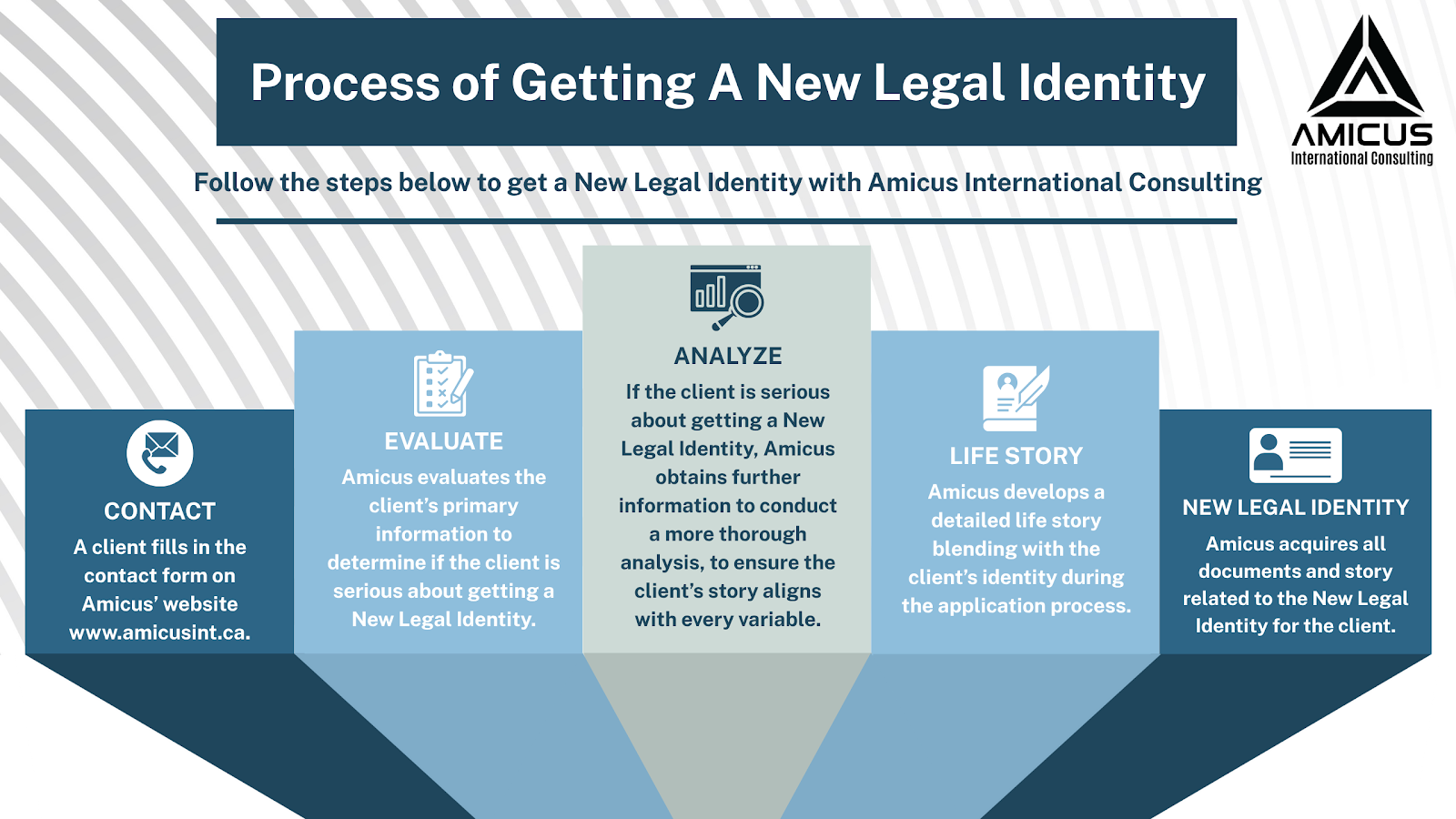
For international clients considering a lawful identity change, Amicus emphasizes that the Japanese model of disappearance is culturally specific. In contrast to the limited options in Japan, many Western countries offer clear legal pathways to changing one’s identity without resorting to informal relocation.
For example, U.S. residents can petition for court-ordered name changes, often with options for sealed records when safety is a concern. European nations, such as Sweden and New Zealand, offer administrative name changes with minimal requirements, while Caribbean countries provide legal identity restructuring through citizenship-by-investment programs.
Amicus International Consulting assists individuals worldwide in navigating the legal process of changing their identity. Unlike the jōhatsu practice, Amicus services prioritize legality, transparency, and access to essential services following the transition.
Clients using Amicus can update government records, obtain valid identification, and live within the law while still enjoying the benefits of personal reinvention.
Notably, Amicus warns clients against attempting to recreate the jōhatsu model outside of Japan without legal guidance. Disappearing without updating one’s legal identity in Western nations can lead to difficulties in employment, housing, and accessing healthcare. It may result in unintended criminal charges related to document fraud, benefit fraud, or misrepresentation.
Despite the cultural differences, Amicus recognizes some universal themes behind voluntary disappearance. Whether in Japan, the United States, or Europe, people disappear to escape unbearable personal circumstances, rebuild dignity, or reclaim control over their lives. The common thread is the desire for a second chance, away from societal pressures, judgment, or danger.
Japan’s jōhatsu phenomenon offers unique insights into how cultural pressures influence personal decisions. In a society where personal shame carries disproportionate social penalties, disappearing offers a silent protest and a personal reset. While the system tolerates these disappearances, it also reflects deeper issues of social isolation, economic pressure, and the need for improved social support systems.
Amicus concludes that while Japan’s jōhatsu phenomenon remains a unique cultural practice, the global increase in legal identity change reflects a broader societal shift. In 2025, legal systems are increasingly recognizing the right to personal reinvention, especially in cases involving safety, dignity, and privacy.
Amicus continues to advocate for lawful, secure, and sustainable pathways for identity change that respect both the individual’s need for privacy and society’s need for transparency and accountability.
For clients seeking lawful pathways to start anew, Amicus International Consulting provides comprehensive legal support for name changes, identity restructuring, digital footprint erasure, and seamless integration into financial, social, and professional systems following the change. Unlike the informal methods used by jōhatsu participants, Amicus focuses on ensuring clients retain full legal rights, access to services, and long-term personal security.
Japan’s jōhatsu mystery remains a reflection of its unique cultural fabric, but the global trend toward legal identity change continues to grow. Amicus International Consulting remains at the forefront of these evolving dynamics, offering clients a safe, legal, and dignified pathway to start fresh.
Contact Information
Phone: +1 (604) 200-5402
Email: info@amicusint.ca
Website: www.amicusint.ca
Follow Us
LinkedIn: https://www.linkedin.com/company/amicus-international-consulting
Twitter/X: https://twitter.com/AmicusInt
Facebook: https://www.facebook.com/amicusinternationalconsulting
Instagram: https://www.instagram.com/amicusinternationalconsulting