
A global guide to lawful identity transformation, relocation, and digital reinvention in 2025
VANCOUVER, British Columbia – In an age where surveillance systems track movements, facial recognition monitors borders, and your name is tied to every transaction, the idea of disappearing may seem like something out of fiction.
But for thousands worldwide each year, starting over legally—by changing your name, documents, country, and digital footprint—is not only possible but increasingly common.
At the heart of this transformation is a growing demand for changes to legal identity. This process enables individuals to lawfully sever ties with their past and build a future unencumbered by former records, reputations, or risks.
Amicus International Consulting, a leading authority on international identity transformation, has reported a 31% increase in clients pursuing legal disappearance solutions since early 2024. The motives range from survival and safety to opportunity and reinvention.
This press release examines how legal identity change operates, the jurisdictions that support it, and how individuals can overcome their past without violating the law.
Why Do People Disappear? Debunking the Criminal Myth
It is a common misconception that those who seek new identities are trying to escape justice. In reality, most cases involve people escaping unfair systems, not consequences.
Common clients include:
- Survivors of domestic violence fleeing long-term threats
- Political dissidents or journalists facing state retaliation
- LGBTQ+ individuals escaping anti-gay laws in their home countries
- Victims of cancel culture and social blocklisting
- Entrepreneurs trying to restart after a failed business venture
- Refugees who lack documentation but need a legal status
- People whose digital lives were destroyed by identity theft
An Amicus analyst explains: “What we see is not criminal behaviour but lawful desperation. These are people who want to stay compliant with the law but no longer feel safe or free under their existing identity.”
Legal Disappearance vs. Fraud: The Key Distinction
The distinction between a criminal disappearance and a legal one hinges on intent, documentation, and transparency.
- Illegal disappearance often involves deception, including the use of fake passports, false declarations, or forged birth certificates.
- Legal disappearance involves replacing identifiers through official processes, such as court-ordered name changes, verified corrections to birth records, and naturalization or residency under new documentation.
Done correctly, this transition is legal in over 40 countries. What matters is consistency across jurisdictions and compliance with both domestic and international identity laws.
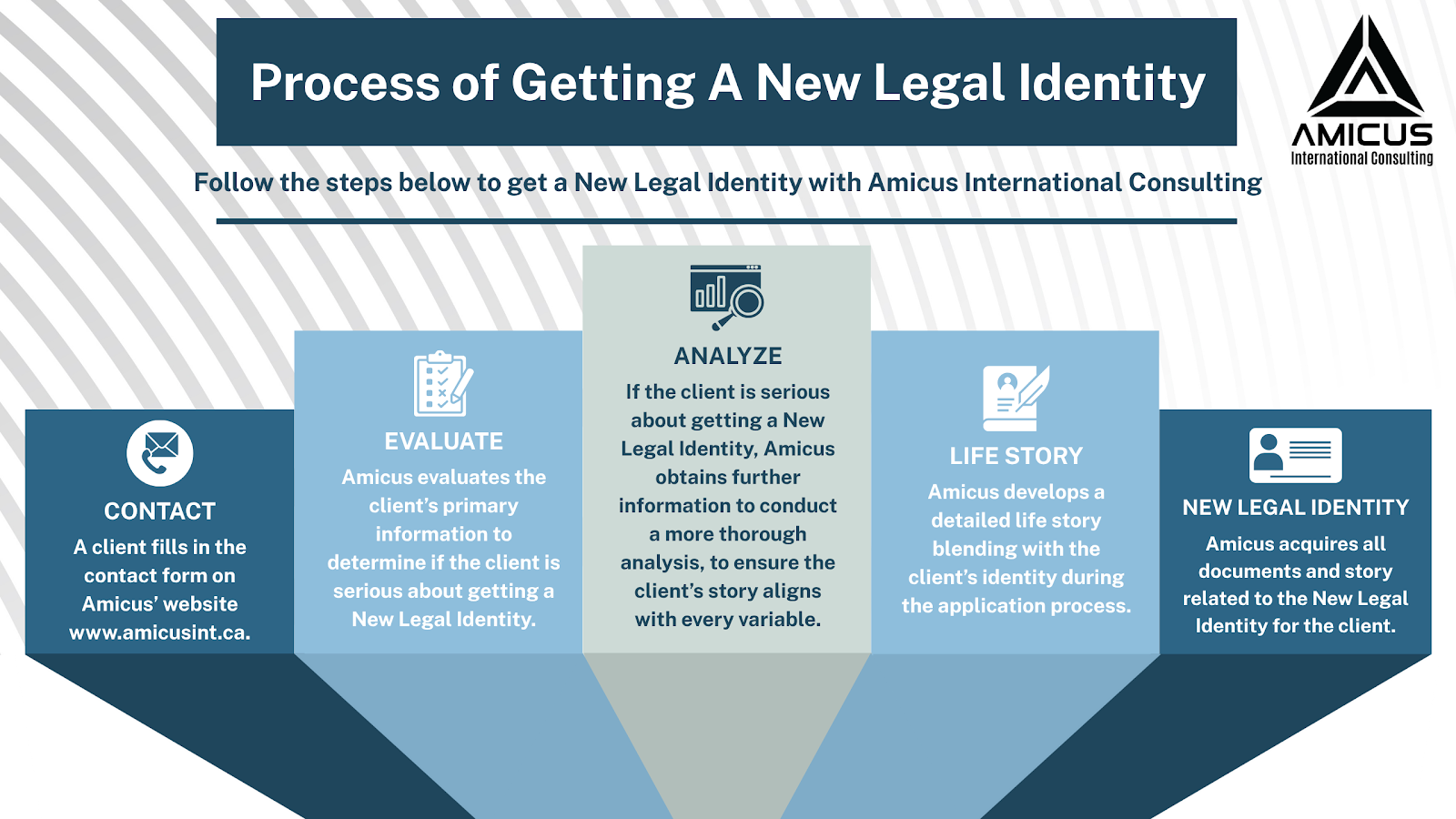
Step 1: Name Change—The Gateway to a New Identity
A legal name change is the foundation of a lawful disappearance. Depending on the country, this can be completed through:
- A notarized affidavit (in countries like Belize or Dominica)
- A court petition (in the United States, the UK, or Canada)
- Public announcement and registration (in some European countries)
Once a new name is legally approved, it can be used on all subsequent documents, including driver’s licenses, bank accounts, passports, and tax IDs.
Some countries do not require public notification or lengthy justification for such actions. Others, however, require a published notice in a local gazette. Choosing the proper jurisdiction is crucial for maintaining privacy and legitimacy.
Step 2: Birth Record Re-Registration—Resetting the Anchor
In some cases, particularly when individuals were never properly registered at birth, a new birth certificate can be legally issued in select countries. This is especially relevant for:
- Stateless individuals
- Orphans from war zones
- People from collapsed states or with corrupt registration systems
While rare, this allows individuals to start over with a new document of origin, effectively severing any direct ties to the previous identity.
Step 3: Legal Relocation—Building Life in a New Jurisdiction
Relocating to a new country is often necessary for rebuilding one’s identity within a new legal framework. Standard legal relocation options include:
- Residency-by-deposit (Paraguay, Uruguay, Georgia)
- Friendly Nations Visa (Panama)
- Digital Nomad Visas (Croatia, Estonia, Costa Rica)
- Asylum-based pathways for qualified candidates
Countries like Paraguay allow legal residency with as little as a $5,000 bank deposit, no income requirement, and no background check on personal reputation—only verification of the documents’ legality.
Step 4: Passport and Citizenship—Finishing the Legal Reset
With a new name and residency in place, the final step is naturalization or fast-tracked citizenship. Legal options include:
- Citizenship-by-investment programs (Dominica, St. Kitts & Nevis, Turkey)
- Ancestry-based citizenships (Ireland, Italy, Ghana)
- Special naturalization clauses (Argentina, Nicaragua, Vanuatu)
Each offers pathways to acquiring a legal passport under your new identity, recognized internationally and supported by a treaty.
Case Study 1: The Editor Who Escaped Threats and Rebuilt in Panama
A newspaper editor in Southeast Europe began receiving death threats after publishing government corruption exposés. After facing harassment from local police and media attacks, she contacted Amicus for help.
Within 16 months, she had:
- Legally changed her name via court petition in the Caribbean
- Applied for residency in Panama under the Friendly Nations program
- Opened bank accounts under her new identity
- Acquired full second citizenship in Paraguay
She now works remotely as an international editor, free from fear—and entirely legal.
Avoiding Mistakes: Common Legal Pitfalls in Disappearing
While the process is legal, it is not simple. The most frequent errors include:
-
- Starting a new residency application while travelling on the old identity
- Opening bank accounts under one name and passports under another
- Failing to update the national tax authorities
- Inconsistency between digital and legal footprints
Amicus warns that any of these errors can lead to flagging by INTERPOL databases, banking freezes, or visa denials.
Expert Interview: Legal Identity Change in 2025
Q: Can someone vanish legally in 2025?
A: “Absolutely. But it’s not about disappearing—it’s about transforming. A legal identity change is structured, traceable, and fully compliant with the laws of the jurisdictions involved.”
Q: What makes it legal versus illegal?
A: “Legal disappearance requires the use of government channels. You submit paperwork, disclose where necessary, and align your identifiers across systems.”
Q: What’s the most challenging part?
A: “Keeping consistency. Every detail must match—from immigration forms to tax records to digital signatures. One error, and the system flags you.”
Q: Can anyone do it?
A: “Technically yes—but some have easier paths. For example, those with dual nationality, clean criminal records, or investment capital find more open doors.”
Digital Identity Reinvention: How to Delete Your Online Past
Even after legal documents are changed, the internet often retains old photos, profiles, and records. That’s why Amicus includes digital erasure in all identity change packages.
Steps include:
- Using GDPR and CCPA tools to request search engine removal
- Contacting social media platforms for account closure
- Hiring content removal specialists to target harmful or outdated pages
- Using reputation management software to flood search results with new content
“Privacy today means managing both paper and pixels,” says Amicus’s digital specialist.
Case Study 2: The Executive Blacklisted by a Business Rival
After a hostile takeover attempt, a corporate CEO found his name linked to fabricated allegations across business forums and industry media. Though never charged, he was shut out of the financial industry.
With help from Amicus, he:
- Legally changed his name through a Belize affidavit
- Relocated to Georgia with legal residency
- Gained Dominican citizenship within 15 months
- Built a new corporate structure under the new name
He now operates in international logistics and maintains full legal compliance across multiple countries.
Jurisdictions That Welcome Legal Identity Change
Some countries are more favourable for legal reinvention due to relaxed regulations and accessible bureaucracy. Top current picks include:
- Paraguay – Easiest legal residency in the world
- Panama – Low-cost, reputation-friendly banking and relocation
- Dominica – High-speed name change and citizenship
- Namibia – Legal name change without publication requirements
- Georgia – Simplified document legalization and low cost of living
- Argentina – Easy naturalization process with minimal background scrutiny
These jurisdictions do not violate any international treaties and maintain legal cooperation with major nations.
Case Study 3: From Stateless to Secure—How a Refugee Started Over
A man born in a conflict-ridden Middle Eastern country never received a birth certificate. He had neither a passport nor a digital identity. After living undocumented in Europe, he sought a solution.
Through Amicus, he:
- Registered a legal name through a church record in the Caribbean
- Gained humanitarian residency in Latin America
- Was issued a valid birth certificate under his new name
- Eventually secured a second passport through marriage-based naturalization
His journey, while complex, is now 100% compliant with international law and recognized by immigration systems across Europe and South America.
Amicus International’s Role: Legal, Ethical, Global
With decades of legal, financial, and geopolitical experience, Amicus International Consulting provides comprehensive support for:
-
- Verified name changes
- Dual nationality applications
- Digital footprint removal
- Offshore account creation
- Psychological and legal preparation
The firm collaborates with compliance officers, lawyers, and embassy contacts to ensure that every case is thoroughly documented, secure, and legitimate.
Final Word: Starting Over Is a Right, Not a Crime
In 2025, the world will offer more tools than ever for reinvention—legally, safely, and discreetly. Disappearing no longer means hiding in the shadows. It means emerging somewhere new, stronger, and fully protected by international law.
Whether driven by survival, privacy, or a desire for peace, legal identity change provides a pathway to begin anew, with honour and lawfulness.
Contact Information
Phone: +1 (604) 200-5402
Email: info@amicusint.ca
Website: www.amicusint.ca
Follow Us:
LinkedIn
Twitter/X
Facebook
Instagram