
Why more people in 2025 are choosing lawful reinvention to begin a better life
VANCOUVER, British Columbia — For many people stuck in cycles of trauma, public shame, reputational ruin, or financial hardship, starting over isn’t a fantasy—it’s a lifeline. Legal identity change, once associated with witness protection or rare humanitarian cases, is now a viable option for people looking to leave behind a painful past and step into a future they can control.
Amicus International Consulting, a global firm specializing in verified legal identity transformation, reports a record number of cases in 2025. Their clients range from domestic violence survivors to whistleblowers, bankrupt professionals, and privacy seekers. What they share is a common desire: to rebuild their lives using lawful methods that open doors, not close them.
This press release explains how legal identity change enables individuals to start anew across borders, industries, and social systems, while remaining fully compliant with domestic and international law. It features real client stories, expert insights, and a comprehensive breakdown of how new names, clean documentation, and legal strategies create genuine opportunities.
Why Legal Identity Change Matters More Than Ever in 2025
In a world where digital footprints, facial recognition, public databases, and AI monitoring systems track every move, escaping the past requires more than relocation—it needs reinvention.
“People used to believe that if you moved to a new town and changed your phone number, you could start over,” said a legal strategist at Amicus. “But in 2025, your old name is everywhere—on court filings, Google search, credit reports, facial recognition software. If you want a real reset, it needs to be legal, digital, and international.”
Legal identity change doesn’t mean deception. It means navigating existing laws to change one’s name, update official records, and protect oneself under the jurisdictional protections of international privacy, residency, and document laws.
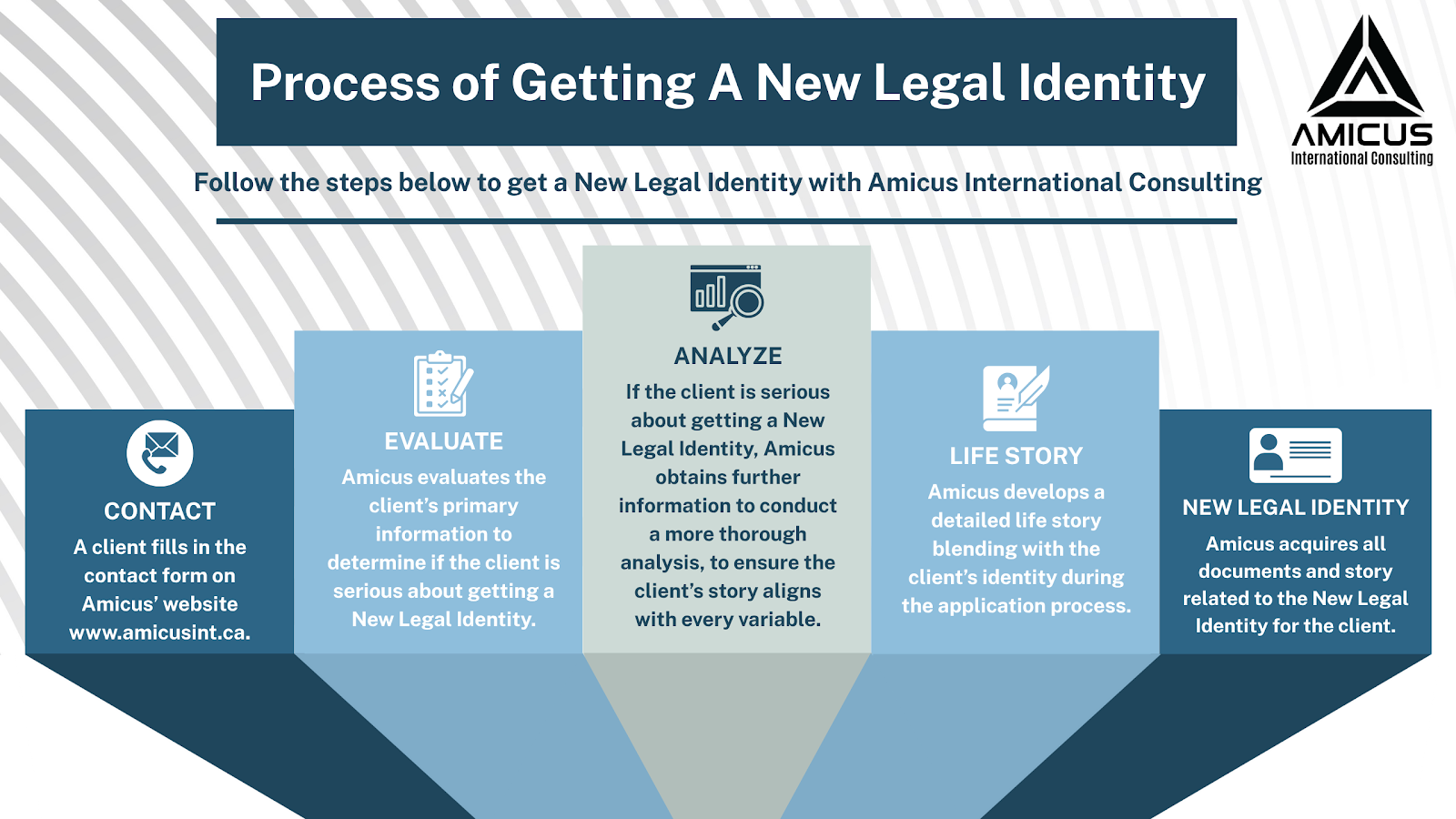
Step 1: Legal Name Change as the Gateway
Every state in the U.S., as well as Canada and most countries worldwide, offers citizens the right to petition for a legal name change. Common reasons include:
- Safety from stalking, harassment, or abuse
- Gender affirmation or transition
- Religious or personal reinvention
- Dissociation from a disgraced or damaged identity
- Fresh start after bankruptcy or defamation
Amicus helps clients select the proper jurisdiction—some allow sealed records, faster approvals, or minimal public disclosure. Once approved, the court order becomes the legal basis for changing every official document moving forward.
Step 2: Full Document Synchronization
After the legal name change is granted, Amicus coordinates updates across:
- Passport and national ID
- Social Security or tax number
- Driver’s license and voter registration
- Employment, health, and insurance records
- Financial and educational accounts
“Every document must match,” said an Amicus compliance advisor. “If you apply for a residency or job abroad and your passport, tax ID, and LinkedIn don’t align, you’ll get flagged.”
Amicus uses the Hague Apostille system and certified notarial chains to ensure global acceptance of name change documents.
Step 3: Residency or Citizenship in a New Country
For clients looking to start over outside their home country, Amicus helps lawfully acquire:
- Residency by Investment (Panama, Portugal, Paraguay)
- Second citizenship by descent (Ireland, Italy, Poland)
- Economic citizenship (Dominica, St. Kitts & Nevis, Vanuatu)
- Humanitarian or privacy relocation (Uruguay, Georgia, New Zealand)
These legal programs enable clients to obtain a new passport or national ID, often in a more privacy-friendly and lower-surveillance country.
Case Study #1: From Bankruptcy to Business in Panama
After losing his U.S.-based business in a public civil suit, a former tech CEO contacted Amicus for a complete reset. After a name change in Nevada, Amicus guided him through Panama’s Friendly Nations residency. He re-registered his new business under his legal new name, opened banking and merchant accounts, and now operates across Latin America as a lawful foreign resident. His former digital footprint was entirely suppressed with GDPR-style requests and Amicus’s digital scrub services.
Step 4: Digital Erasure and Online Rebirth
A new name means little if your old one still appears online. Amicus’s privacy team helps clients:
- File GDPR, CCPA, and global data deletion requests
- Remove court filings from search engines (where permitted)
- Delete or rebrand social media, blog, and business listings
- Create new email, phone, and domain registrations under a new identity
- Monitor for resurfacing of old names in AI or public databases
Without digital compliance, legal identity change is only half complete.
Expert Interview: Legal Identity Consultant on New Opportunities
We spoke with a senior advisor at Amicus who has managed over 800 global identity transitions.
Q: What’s the biggest myth about starting fresh legally?
A: “That it’s fake. It’s not. You’re not forging anything—you’re using the law to update who you are in the eyes of courts, banks, governments, and the digital world.”
Q: Who benefits most from identity change?
A: “People with reputational damage, survivors of public trauma, professionals needing a business reset, people whose safety is threatened. Our job is to help them do it legally and completely.”
Q: Is this like witness protection?
A: “No. That’s for federal witnesses under government protection. What we do is voluntary, civilian, and lawful—and can be more powerful because it lasts across borders.”
Case Study #2: American Woman Escapes Digital Harassment in Portugal
After being targeted in a doxxing incident related to her work in public health, a 38-year-old American professional changed her name in California and relocated to Portugal under the D7 visa. Amicus helped her update all personal records, delete over 1,000 outdated search results, and rebrand her resume and business services under her new name. She now works remotely, legally and anonymously.
The Power of a Legal Reset: New Identity, New Access
With a verified new identity, Amicus clients gain access to:
- Reopened credit opportunities in a new country
- Professional rebranding without a trail of negative search results
- Safe travel under new documentation
- Banking and financial privacy using FATCA-compliant offshore tools
- Protection from data brokers, online harassment, and stalking
- Eligibility for new tax structures, businesses, and international residency benefits
“We’ve seen people go from completely trapped—socially, financially, emotionally—to empowered,” said the strategist. “It’s not just new paperwork. It’s a new life.”
Case Study #3: Transgender Consultant Begins Again in Uruguay
After facing harassment in Florida, a transgender IT consultant contacted Amicus. Within a year, she had legally changed her name and gender marker, updated her passport, and relocated to Uruguay under a digital nomad program. She now operates a consulting business with her new legal identity, and Amicus continues to monitor and protect her digital privacy.
Who Amicus Helps
Amicus does not work with fugitives or individuals attempting to evade lawful court obligations. Eligible clients include:
- Domestic violence and stalking survivors
- Individuals with damaged reputations or digital harassment
- Whistleblowers and journalists under political threat
- Transgender individuals facing discrimination
- Professionals restarting after bankruptcy or legal fallout
- People seeking long-term privacy and jurisdictional freedom
Where Amicus Operates Globally
- North America: Canada, U.S. (state-by-state identity laws)
- Latin America: Panama, Paraguay, Uruguay, Mexico
- Europe: Portugal, Ireland, Poland, Georgia
- Asia-Pacific: Thailand (limited), New Zealand
- Caribbean: Dominica, St. Kitts, Antigua
- Africa: South Africa, Seychelles (residency only)
Timeline for Legal Identity Transformation
| Stage | Timeframe |
|---|---|
| Name change and court filing | 1–3 months |
| Document realignment | 2–4 months |
| Residency or second passport | 3–12 months |
| Digital scrub and identity rebuild | 3–6 months |
| Full transformation | 9–18 months |
Estimated Costs
| Service | Cost (USD) |
|---|---|
| Name change + filings | $2,000–$5,000 |
| Full document synchronization | $5,000–$10,000 |
| Digital privacy and erasure | $5,000–$15,000 |
| Residency relocation setup | $10,000–$30,000 |
| Second citizenship (optional) | $100,000+ |
| Full package | $30,000–$150,000+ |
Conclusion: A New Identity Is a New Beginning
In a world that never forgets, legal identity change is the modern tool of personal freedom. With the proper guidance, a new name and passport are more than symbols—they are keys to opportunity, safety, and peace.
Amicus International Consulting empowers individuals to start over without fear, stigma, or illegal shortcuts. In 2025, freedom begins with identity, and identity starts with the law.
Contact Information
Phone: +1 (604) 200-5402
Email: info@amicusint.ca
Website: www.amicusint.ca
Follow Us: LinkedIn | Twitter/X | Facebook | Instagram